On this page
AT A GLANCE
Cups are the tarot suit commonly associated with feeling, relationship, imagination and emotional meaning. They ask how experience is received and shared. A Cups card can concern art, friendship or a working relationship as readily as romance.
Explore the four suits →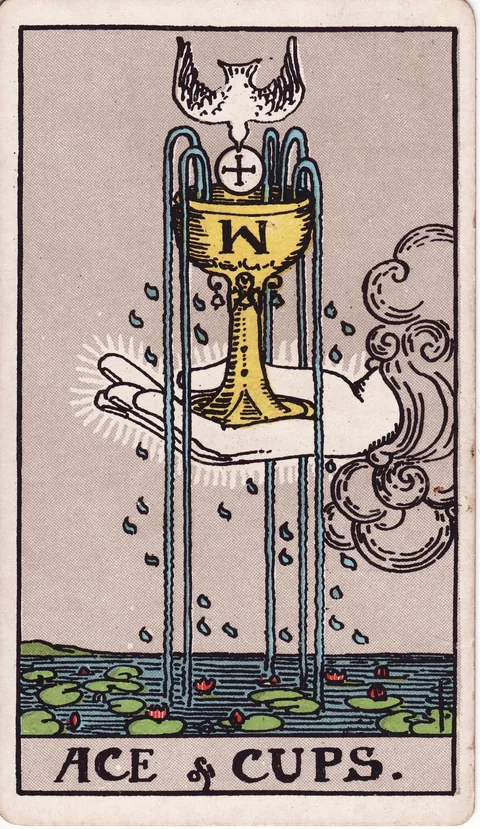
Feeling without mind-reading #
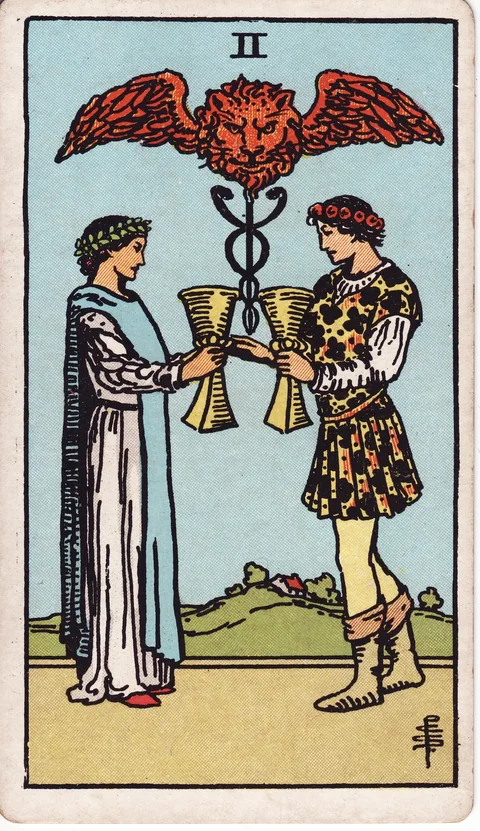
Golden Dawn-derived tarot associates Cups with Water. The vessel can suggest receiving, containing or offering experience. Some decks call the suit Chalices. Neither the suit nor its element gives access to another person’s private thoughts.
Emotional interpretation works best through questions: what matters here, what is being offered and what has actually been communicated? Do not turn a wish for connection into a prediction that another person shares it.
Different kinds of emotional experience #
The Ace offers openness; the Two mutual exchange; the Three shared enjoyment. The Four pauses, the Five acknowledges loss, and the Six brings memory and familiar kindness. These images are more specific than a single keyword such as love.
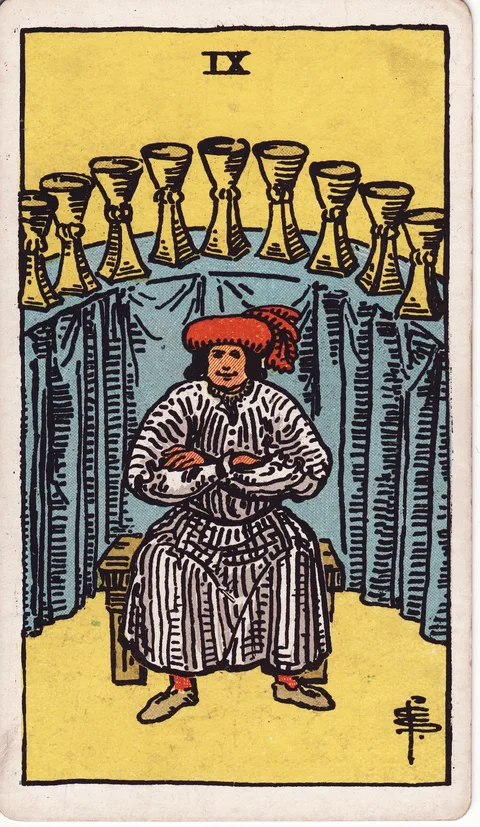
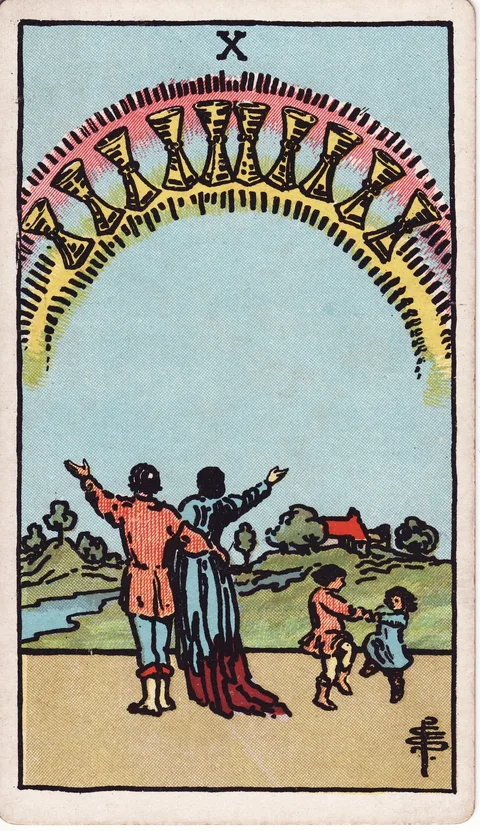
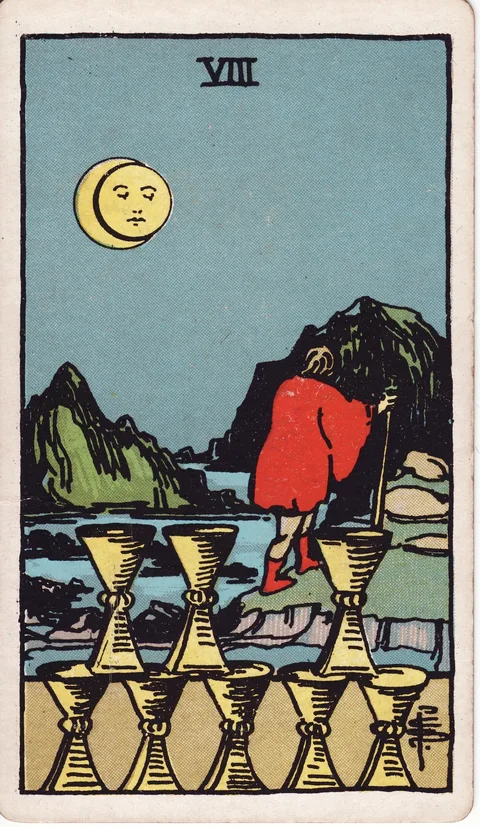
The Seven presents competing possibilities, the Eight a departure, the Nine individual satisfaction and the Ten shared belonging. Nine and Ten are both fulfilling images, but their social scale differs.
Feeling as a role or practice #
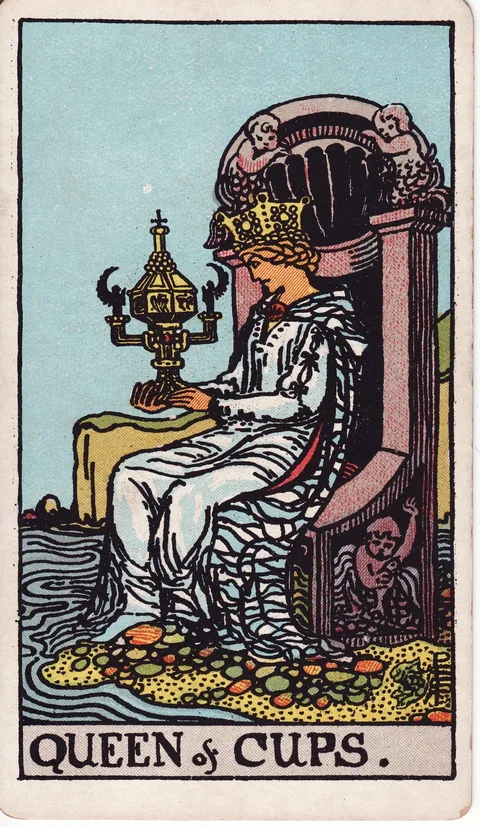
The Page approaches a feeling with curiosity; the Knight carries an invitation or ideal; the Queen listens and reflects; the King holds steadiness amid demands. Courts can be approaches to practice rather than people to identify. None is restricted by gender.
A suit-level example #
In a collaboration reading, Two of Cups with Four of Cups could ask whether an offer is reciprocal and whether both participants are ready to engage. It would not prove secret reluctance; ask directly.
Several Cups may invite attention to emotional stakes, but practical facts still matter. The suit cannot diagnose mood, guarantee reconciliation or make an ideal family picture a standard every reader must meet.
ACROSS TRADITIONS
Explore the connections
Optional correspondences within named systems. Each connection has its own context and source.
Sources & editorial notes
Original explanations and hypothetical examples prepared with AI assistance for Synergy. Sources document the traditions described; they do not establish predictive or causal validity.
Rider–Waite–Smith artwork by Pamela Colman Smith, public domain. Images are resized historical scans from Wikimedia Commons; the full card images retain their borders and original coloring. Image sources and credits.
- A. E. Waite, The Pictorial Key to the Tarot (1911), illustrated by Pamela Colman Smith
Parts I–III: deck divisions, suit images and card sequence. Interpretive examples here are original.
- Golden Dawn, Book T: The Tarot (historical manuscript compilation)
Printed pages 3–7 and the suit sections: Golden Dawn elemental and astrological attributions.
Related tarot reading

Put it into practice
The daily reading uses 22 Major Arcana cards. A draw is not guaranteed to include the card you are studying.
Try Synergy’s daily one-card reading (Major Arcana only) →