On this page
AT A GLANCE
Water is an astrological category associated with feeling, memory and subjective responsiveness. Its signs are Cancer, Scorpio and Pisces. It offers a vocabulary for emotional relevance, not evidence that someone can read minds or has stronger feelings than everyone else.
Explore the four elements →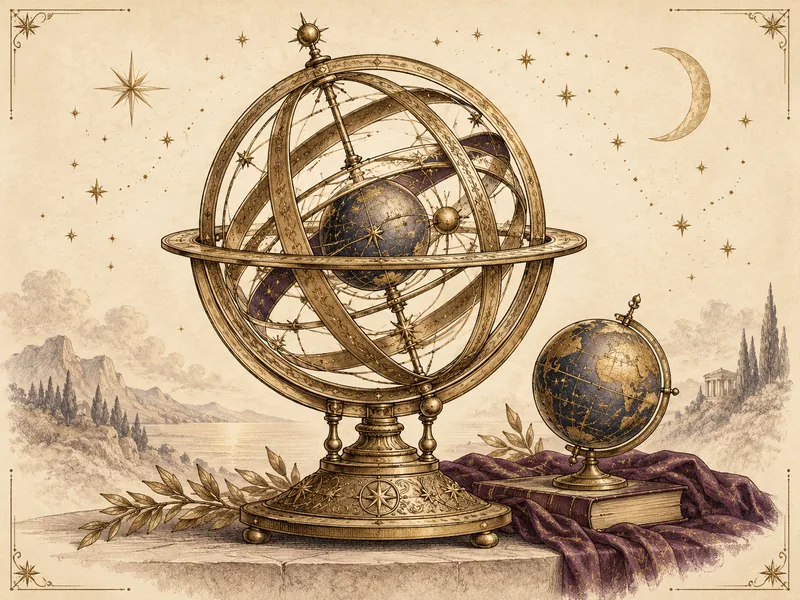
The signs within this element #
Cancer is cardinal Water, initiating care and protection; Scorpio is fixed Water, sustaining emotional investment; Pisces is mutable Water, adapting and connecting through feeling or imagination. The modalities make these signs distinct instead of reducing them all to sensitivity.
Using elements in a chart #
In a chart, a Water emphasis may invite attention to atmosphere and attachment. The interpretation changes with the planets involved and the life settings shown by houses. Counting planets can be a starting point, but it does not measure empathy or reveal how a person behaves.
A concrete example #
A facilitator notices that a technically clear meeting has left people unsettled and asks what remains unspoken. This illustrates Water as attending to felt experience. The useful next step is asking and listening, rather than assuming that an impression proves what others are feeling.
Limits of elemental labels #
Little Water does not mean a person is uncaring, and much Water does not guarantee emotional skill. Boundaries and communication are learned practices. The Golden Dawn association with Cups and the Hanged Man belongs in a separate correspondence layer; it should not replace an individual chart reading.
ACROSS TRADITIONS
Explore the connections
Optional correspondences within named systems. Each connection has its own context and source.
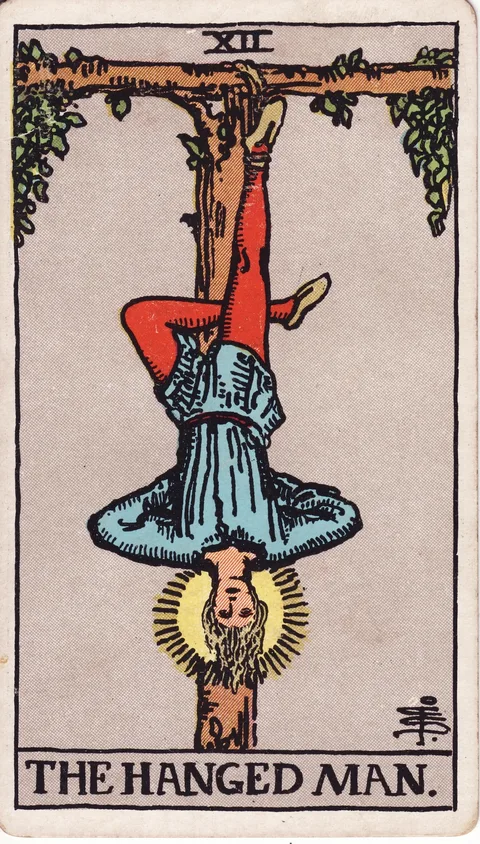
- tarot · Elemental attributionThe Hanged Man →
In Golden Dawn tarot, Water is explicitly assigned to The Hanged Man. This optional tarot correspondence is separate from interpreting Water in an astrological chart.
Golden Dawn / Book T · Source
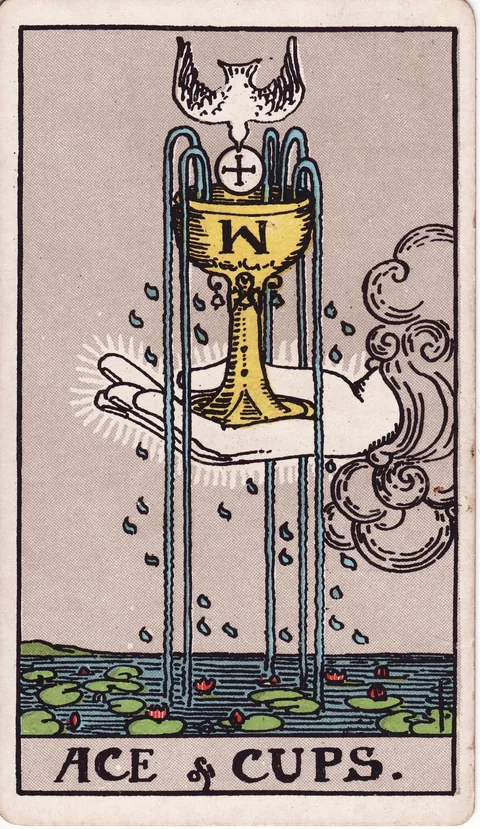
- tarot · Elemental rootAce of Cups →
The Ace of Cups represents the root of Water in Book T's tarot scheme. This is a documented elemental attribution rather than a match inferred from similar themes.
Golden Dawn / Book T · Source
Sources & editorial notes
Original explanations and hypothetical examples prepared with AI assistance for Synergy. Sources document the traditions described; they do not establish predictive or causal validity.
Rider–Waite–Smith artwork by Pamela Colman Smith, public domain. Images are resized historical scans from Wikimedia Commons; the full card images retain their borders and original coloring. Image sources and credits.
- Sepharial, Astrology: How to Make and Read Your Own Horoscope (1920 edition)
Section I, chapter II: the four elemental sign groups. Reflective applications are original explanatory examples.
- Ptolemy, Tetrabiblos, translated by J. M. Ashmand (1822)
Book I, chapter XXI: historical triplicity grouping; later elemental interpretation should not be confused with triplicity rulership rules.