On this page
AT A GLANCE
Wands are the tarot suit commonly associated with initiative, desire and creative effort. They ask what moves a person to act and how that energy is used. Wands can concern work, relationships or personal projects; they are not restricted to career questions.
Explore the four suits →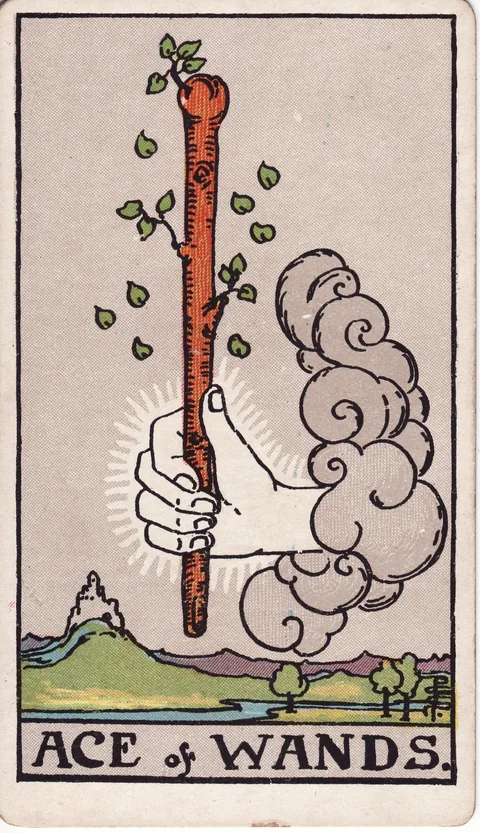
A suit of engagement #
In Golden Dawn-derived tarot, Wands correspond to Fire. The association gives a vocabulary of spark, movement and intensity. It does not mean every Wands card is positive or that drawing one identifies a Fire-sign person.
Other decks may call the suit Batons, Rods or Staves. Names and images vary, so learn the deck’s own guide as well as a general reference. This library uses Rider–Waite–Smith scenes.
From a spark to a burden #
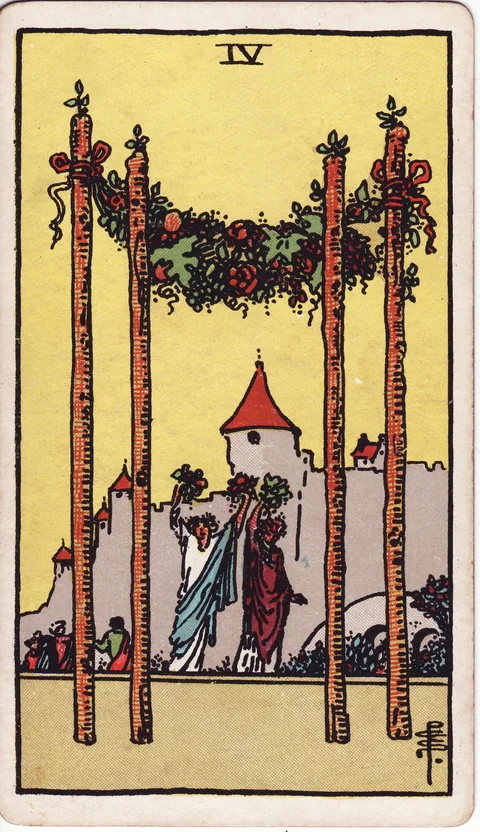
The Ace presents a beginning; the Two plans beyond a boundary; the Three watches outward effort develop. The Four makes a milestone shareable. The Five introduces competing efforts, and the Six public recognition.
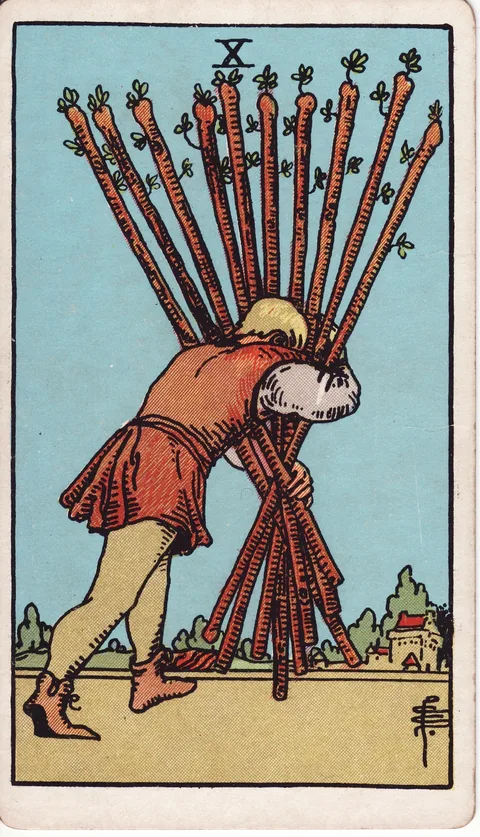
The Seven defends a position, the Eight accelerates movement, the Nine carries experience and vigilance, and the Ten makes accumulated burden visible. This is a study sequence, not a claim that every project must follow ten exact stages.
Four ways of participating #
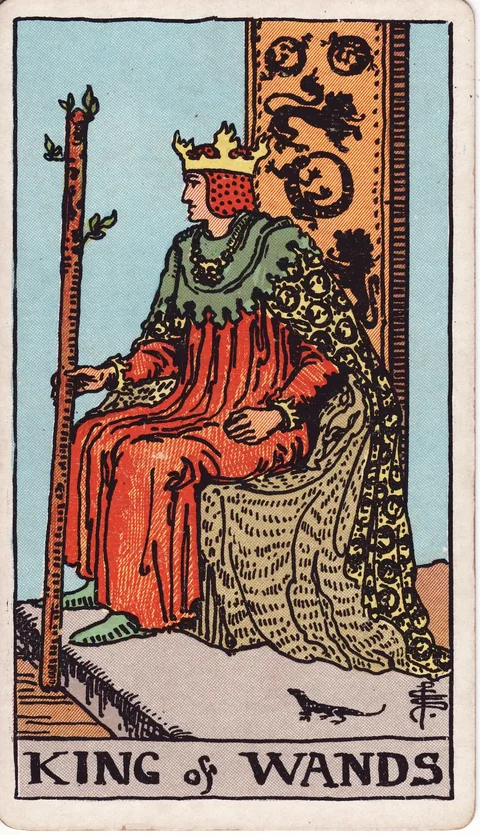
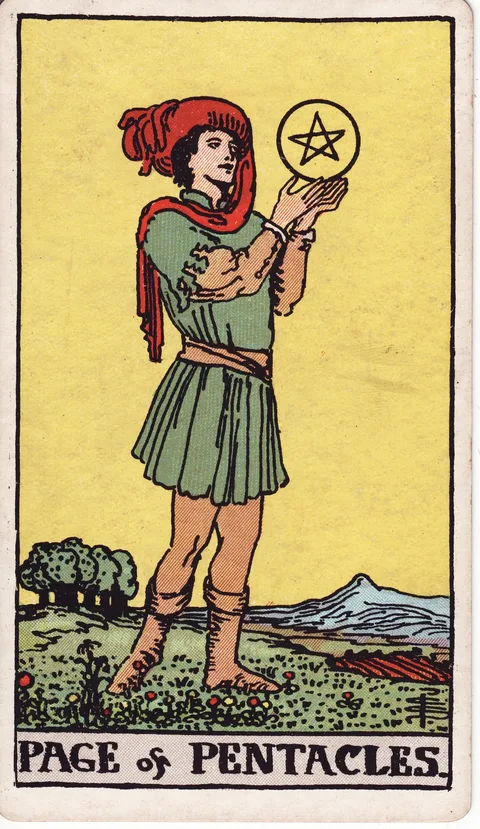
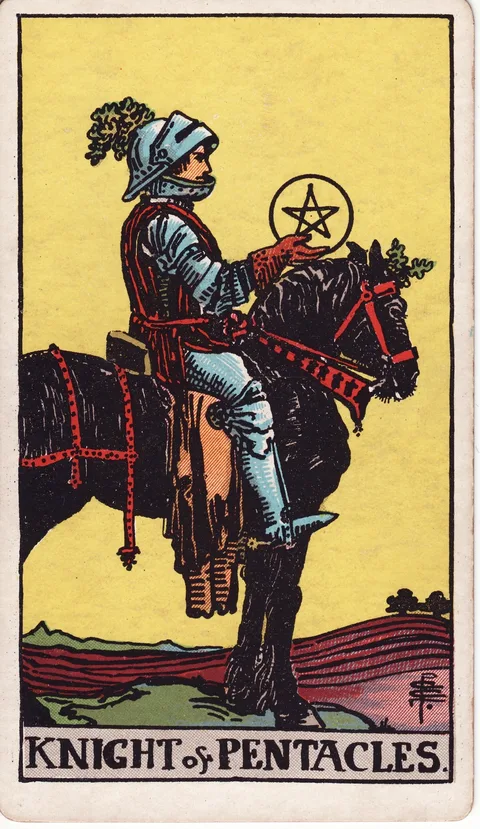
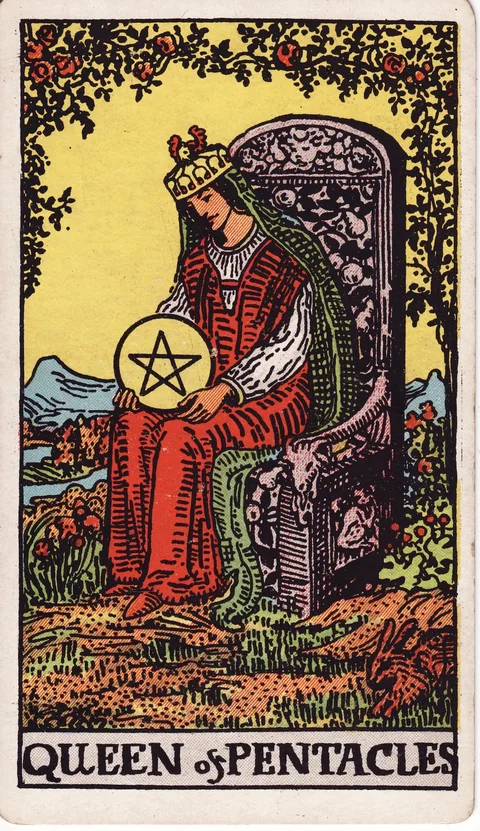
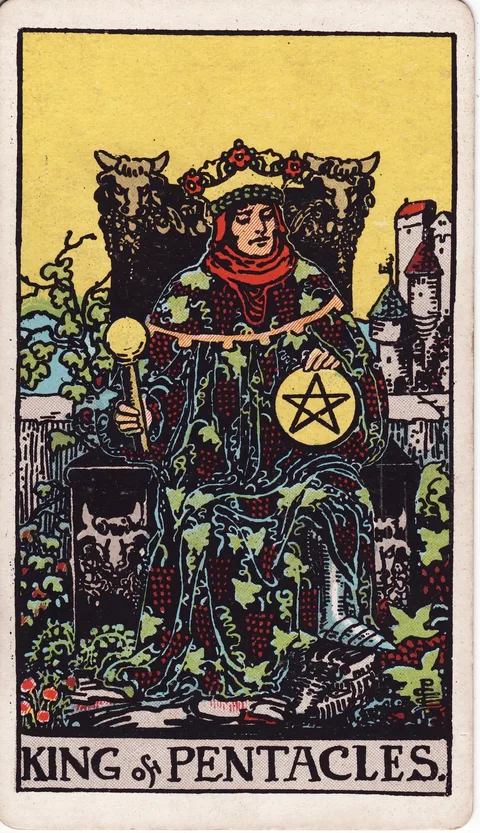
The Page explores, the Knight pursues, the Queen encourages confident participation and the King directs a larger undertaking. These are useful role distinctions, not fixed identities. Someone may need a Page’s curiosity in one task and a King’s accountability in another.
A suit-level reading example #
If several Wands appear in a project reading, ask about pace, motivation and how effort is coordinated. Eight of Wands beside Ten of Wands could prompt a discussion about fast progress becoming overload.
A suit emphasis is an invitation to investigate, not proof of a diagnosis or an event. Keep the specific cards and their positions visible, and do not let the Fire label replace what their pictures actually show.
ACROSS TRADITIONS
Explore the connections
Optional correspondences within named systems. Each connection has its own context and source.
Sources & editorial notes
Original explanations and hypothetical examples prepared with AI assistance for Synergy. Sources document the traditions described; they do not establish predictive or causal validity.
Rider–Waite–Smith artwork by Pamela Colman Smith, public domain. Images are resized historical scans from Wikimedia Commons; the full card images retain their borders and original coloring. Image sources and credits.
- A. E. Waite, The Pictorial Key to the Tarot (1911), illustrated by Pamela Colman Smith
Parts I–III: deck divisions, suit images and card sequence. Interpretive examples here are original.
- Golden Dawn, Book T: The Tarot (historical manuscript compilation)
Printed pages 3–7 and the suit sections: Golden Dawn elemental and astrological attributions.
Related tarot reading
Put it into practice
The daily reading uses 22 Major Arcana cards. A draw is not guaranteed to include the card you are studying.
Try Synergy’s daily one-card reading (Major Arcana only) →