On this page
AT A GLANCE
The Celtic Cross is a ten-card spread that examines a situation from several angles: the immediate issue, its context, the reader’s stance and a possible direction. It is useful when the question needs depth. This guide uses a clearly labeled modern variant, rather than implying that every reader uses identical positions.
Explore tarot spreads →
- 1. Present situation
- 2. Crossing influence
- 3. Underlying foundation
- 4. Recent past
- 5. Conscious aim
- 6. Near development
- 7. My stance
- 8. Environment
- 9. Hopes and fears
- 10. Possible direction
How to place the cards #
Place 1 at the center and 2 sideways across it. Put 3 below, 4 to the left, 5 above and 6 to the right. To the right of that cross, form a vertical staff: 7 at the bottom, then 8, 9 and 10 at the top. Our diagram separates 1 and 2 slightly so both labels remain readable.
Waite published a Celtic method in The Pictorial Key to the Tarot. His exact order, parental-style significator conventions and interpretive wording differ from many modern layouts. We omit a separate significator and use the definitions below. The name alone does not prove ancient Celtic origins.
What all ten positions mean #
1 — Present situation: the main pattern. 2 — Crossing influence: a challenge or modifying factor, not automatically an enemy. 3 — Foundation: a relevant underlying condition. 4 — Recent past: an influence leading into the situation. 5 — Conscious aim: what is being sought. 6 — Near development: a conditional next phase.
7 — My stance: your participation or approach. 8 — Environment: observable circumstances and other people’s contributions, not their secret thoughts. 9 — Hopes and fears: expectations that may pull in different directions. 10 — Possible direction: where the current pattern may lead, subject to action and changing circumstances.
Decide how to read the sideways second card before drawing. A simple method is to read its core meaning without a reversal. If other cards may be reversed, keep that policy consistent throughout the spread.
Worked example: making a project sustainable #
1 Two of Pentacles: competing demands. 2 Ten of Wands: excess load. 3 Three of Pentacles: a collaborative foundation. 4 Ace of Wands: an enthusiastic beginning. 5 Six of Wands: a wish for visible success. 6 Four of Swords: a possible pause.
7 Queen of Swords: capacity to state a boundary. 8 Six of Pentacles: questions about support and resource distribution. 9 The Fool: both hope for a fresh start and fear of inexperience. 10 Eight of Pentacles: a possible return to focused, sustainable practice.
One synthesis is that the project’s original enthusiasm and wish for recognition have outgrown the current workload. Clear limits and a fairer distribution could allow a pause and then a narrower practice. A concrete next step is to agree what can be removed or shared, then review whether that helped.
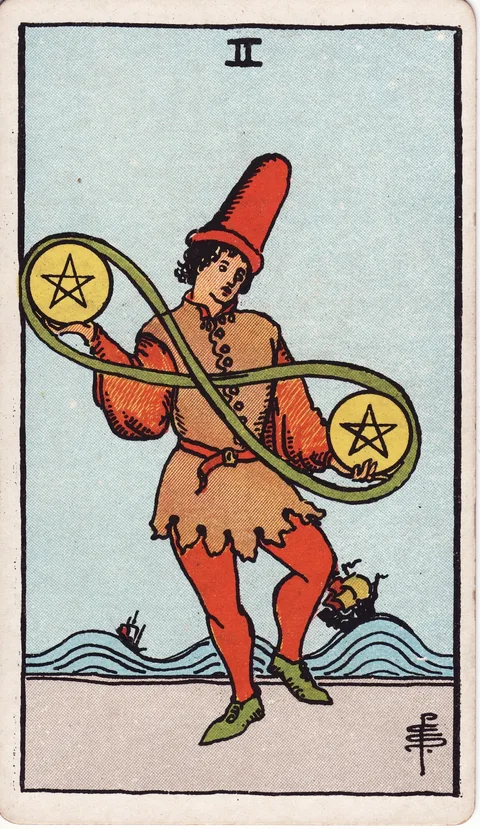 1 · Present situationTwo of Pentacles
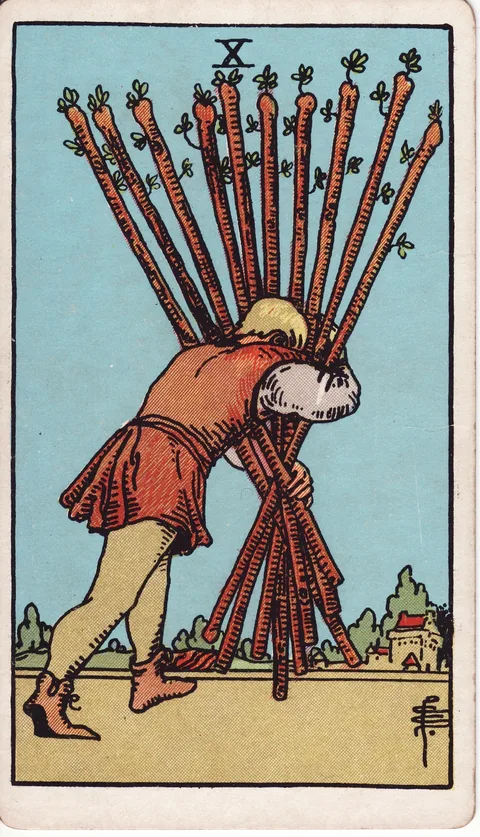 2 · Crossing influence (shown upright)Ten of Wands
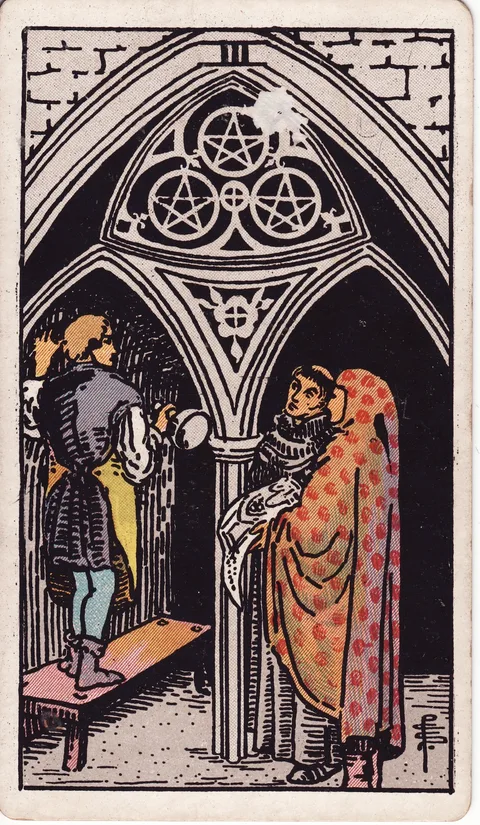 3 · FoundationThree of Pentacles
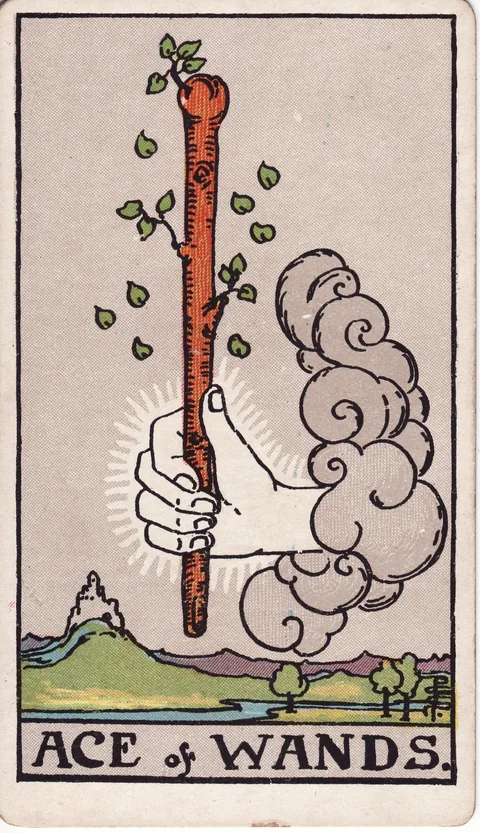 4 · Recent pastAce of Wands
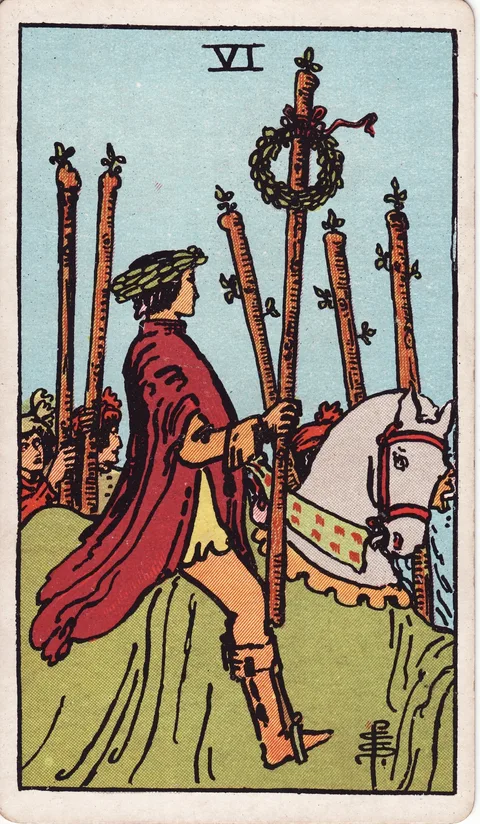 5 · Conscious aimSix of Wands
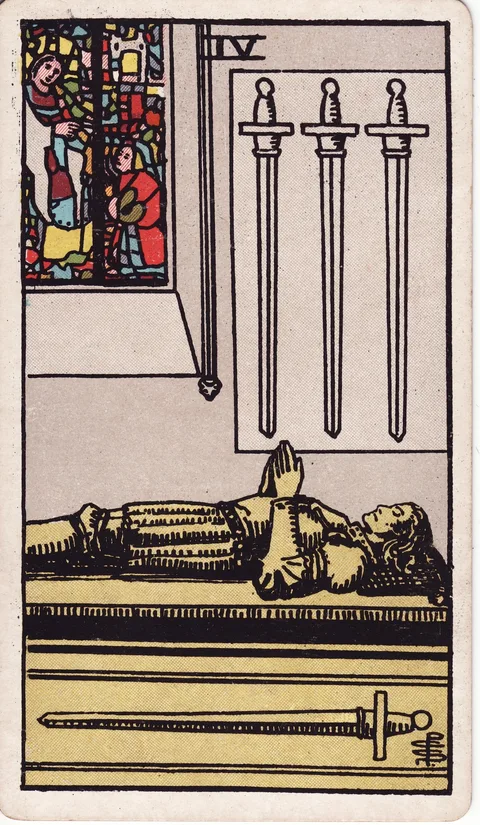 6 · Near developmentFour of Swords
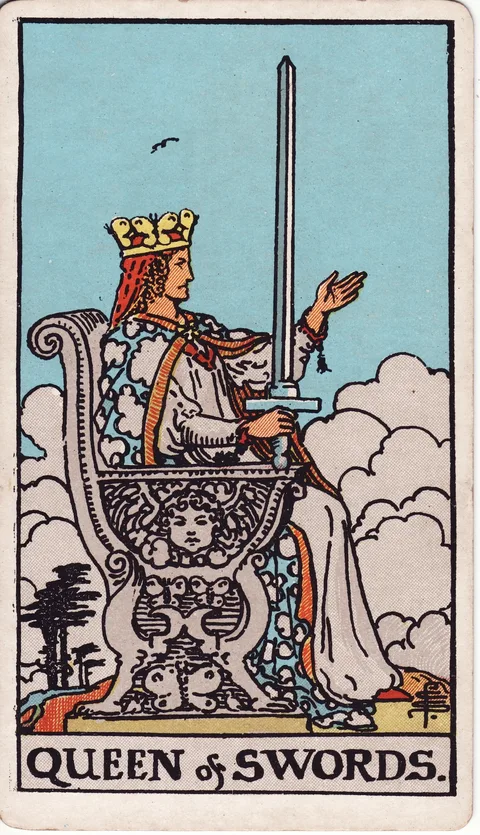 7 · My stanceQueen of Swords
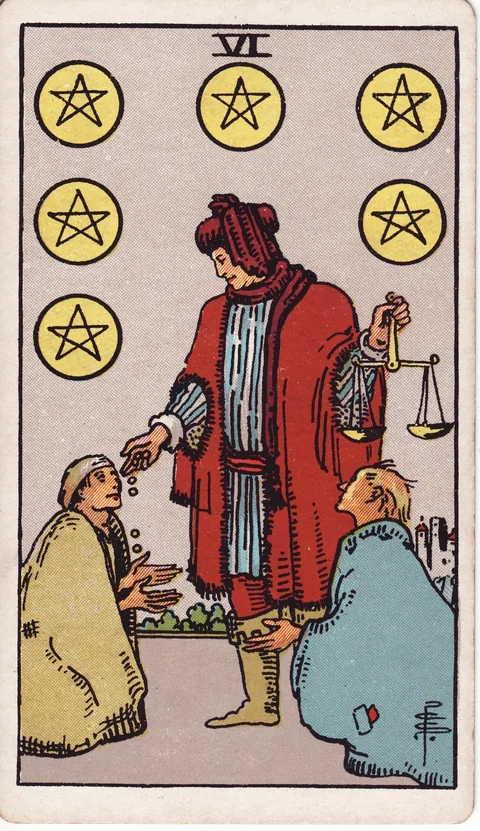 8 · EnvironmentSix of Pentacles
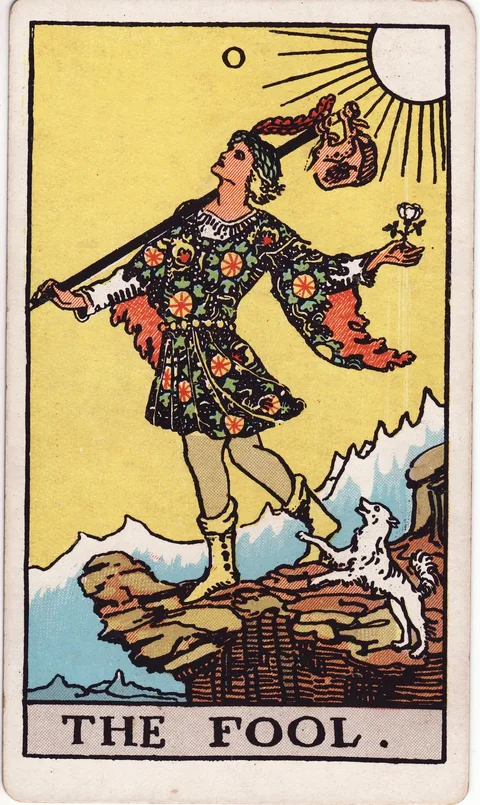 9 · Hopes and fearsThe Fool
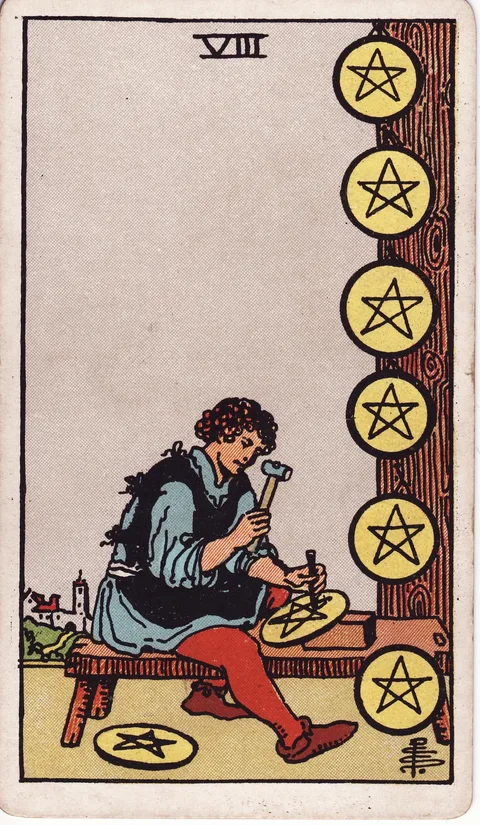 10 · Possible directionEight of Pentacles
Read relationships, not ten separate forecasts #
Compare 1 with 2, 3 with 5, 4 with 6, and 7 with 8. These pairs connect issue and pressure, foundation and aim, earlier pattern and possible development, and personal stance and environment. Let 9 identify expectations that might color the reading before treating 10 as a conclusion.
If the ten cards create confusion, return to a three-card spread next time. Complexity is not accuracy. The Celtic Cross cannot diagnose, establish another person’s motives or guarantee an outcome.
Sources & editorial notes
Original explanations and hypothetical examples prepared with AI assistance for Synergy. Sources document the traditions described; they do not establish predictive or causal validity.
Rider–Waite–Smith artwork by Pamela Colman Smith, public domain. Images are resized historical scans from Wikimedia Commons; the full card images retain their borders and original coloring. Image sources and credits.
- A. E. Waite, The Pictorial Key to the Tarot (1911), illustrated by Pamela Colman Smith
Part III, section 7: historical Celtic method. This guide explicitly uses a modern position variant and omits Waite’s demographic significator rules.
Related tarot reading
Five-card problem-solving spread
A compact cross for situation, obstacle, support, action and a conditional direction.
Interpreting tarot cards together
Combine positions, repeated motifs and contrasts without turning a spread into an arbitrary story.
Upright and reversed cards
Choose a consistent reversal method and keep the card’s image and position central.
Put it into practice
The daily reading uses 22 Major Arcana cards. A draw is not guaranteed to include the card you are studying.
Try Synergy’s daily one-card reading (Major Arcana only) →