On this page
AT A GLANCE
The Knight of Wands concerns energetic pursuit: moving toward an appealing possibility with confidence and appetite for experience. It can bring momentum, but the challenge is whether the pace supports the commitment. A vivid entrance is not the same as dependable follow-through.
Explore all 78 tarot cards →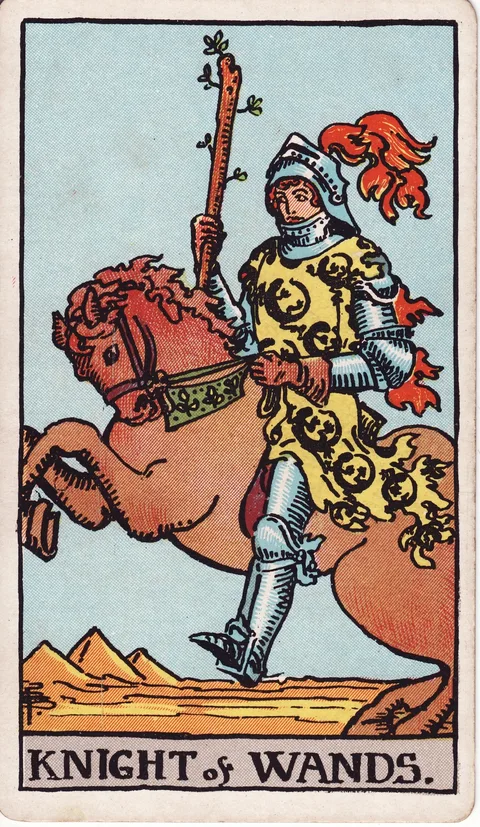 Inspect artwork
Upright meaning #
Upright, take an initiative that has been waiting for action, while defining what continuing it requires. The Knight’s role is movement and engagement. In a relationship reading, explore conduct and pace rather than predicting an exciting stranger.
Reversed interpretation #
Reversed, consider impulsive starts, frustration at delay or energy spent on pursuit without preparation. It may ask for a pause before another commitment. Do not use the card to label someone inherently unreliable; look at actual promises and behavior.
RWS imagery and symbolism #
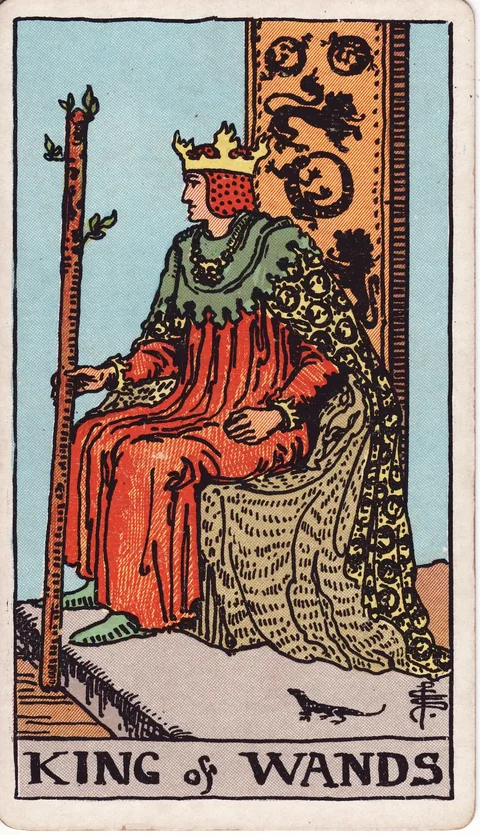
A mounted rider holds a wand, with the horse lifting into an active stance. The clothing and landscape continue the suit’s fiery imagery. Unlike the seated King, this figure emphasizes motion rather than sustained direction of a larger undertaking.
A contextual reading example #
For a reader considering an intense new project, the Knight in an advice position could mean making a clear first move and scheduling the next two steps before announcing a grand plan. In a caution position, it could question whether excitement has hidden the cost.
Distinctions and limits #
Court rank is not a fixed age, gender or horoscope sign. Golden Dawn’s mounted and enthroned court terminology differs from RWS, so simple name-matching would create misleading correspondences.
Sources & editorial notes
Original explanations and hypothetical examples prepared with AI assistance for Synergy. Sources document the traditions described; they do not establish predictive or causal validity.
Rider–Waite–Smith artwork by Pamela Colman Smith, public domain. Images are resized historical scans from Wikimedia Commons; the full card images retain their borders and original coloring. Image sources and credits.
- A. E. Waite, The Pictorial Key to the Tarot (1911), illustrated by Pamela Colman Smith
Part III, Knight of Wands: imagery and historical divinatory meanings. Contextual examples and reversal options are original modern reflective interpretations; historical gender stereotypes and predictive claims are not adopted.
Related tarot reading

Put it into practice
The daily reading uses 22 Major Arcana cards. A draw is not guaranteed to include the card you are studying.
Try Synergy’s daily one-card reading (Major Arcana only) →