On this page
AT A GLANCE
The Four of Cups concerns a pause in engagement: something is offered, but interest or readiness is limited. It can describe dissatisfaction, contemplation or a need to reassess what is being sought. It is not automatically ingratitude or a diagnosis of depression.
Explore all 78 tarot cards →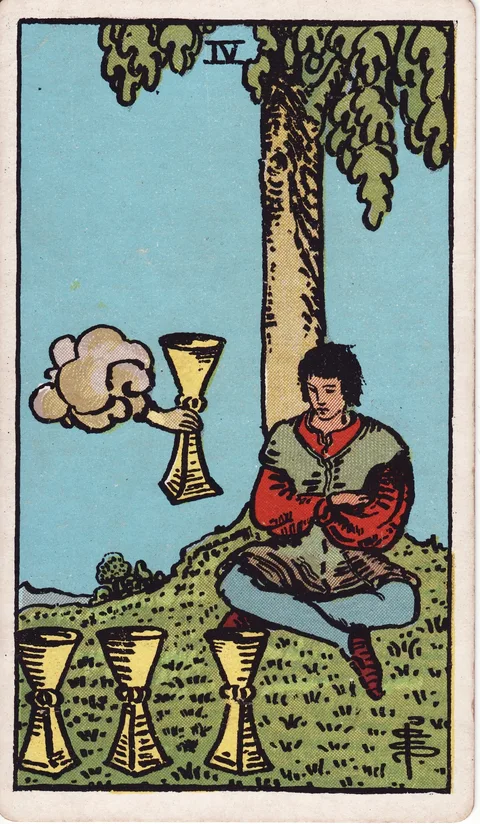 Inspect artwork
Upright meaning #
Upright, ask whether the pause is restorative or whether a narrow focus is making alternatives hard to notice. You do not have to accept every offer. The useful task is understanding what would make engagement meaningful rather than performing enthusiasm.
Reversed interpretation #
Reversed, consider renewed interest, a possibility finally noticed or pressure to move before you are ready. Context determines whether the opening is useful. A change in attention is different from a promise that the external situation has improved.
RWS imagery and symbolism #
A seated figure rests beneath a tree, with three cups on the ground and another extended from a cloud. The offered cup is visible to the viewer but not actively received. The image leaves open whether the person is thoughtfully pausing or disengaged.
A contextual reading example #
In a reading about recurring dissatisfaction at work, the Four as advice could suggest naming what is missing before applying for another similar role. It may also prompt examining a neglected option. The card cannot decide that any available offer should be accepted.
Distinctions and limits #
Do not use the image to shame someone for needing rest or for declining contact. Golden Dawn assigns Moon in Cancer to this card. Its stillness differs from the Eight of Cups’ deliberate departure.
ACROSS TRADITIONS
Explore the connections
Optional correspondences within named systems. Each connection has its own context and source.
Sources & editorial notes
Original explanations and hypothetical examples prepared with AI assistance for Synergy. Sources document the traditions described; they do not establish predictive or causal validity.
Rider–Waite–Smith artwork by Pamela Colman Smith, public domain. Images are resized historical scans from Wikimedia Commons; the full card images retain their borders and original coloring. Image sources and credits.
- A. E. Waite, The Pictorial Key to the Tarot (1911), illustrated by Pamela Colman Smith
Part III, Four of Cups: imagery and historical divinatory meanings. Contextual examples and reversal options are original modern reflective interpretations; historical gender stereotypes and predictive claims are not adopted.
Related tarot reading

Put it into practice
The daily reading uses 22 Major Arcana cards. A draw is not guaranteed to include the card you are studying.
Try Synergy’s daily one-card reading (Major Arcana only) →