On this page
AT A GLANCE
The Knight of Pentacles concerns steady execution, reliability and attention to what a task requires over time. It can support consistency when excitement has faded. The challenge is keeping a method responsive rather than repeating it solely because it is familiar.
Explore all 78 tarot cards →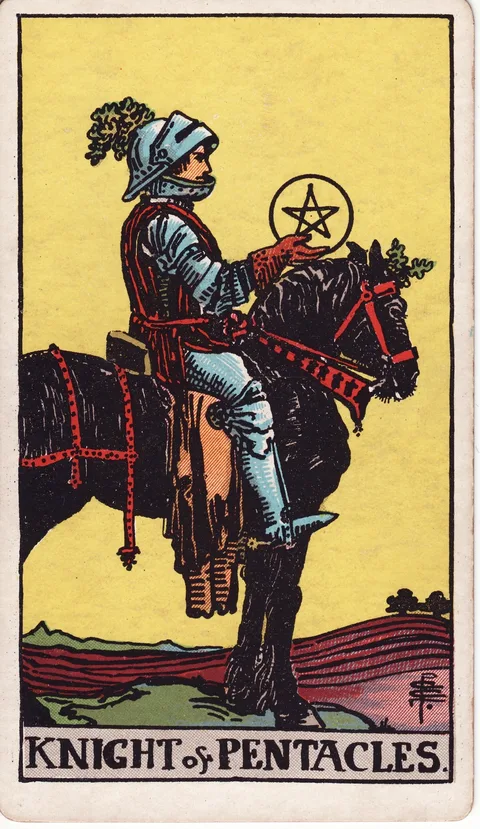 Inspect artwork
Upright meaning #
Upright, make a realistic commitment and carry it through. A slower pace may be the most effective one when details matter. The Knight’s contribution is dependable action, not necessarily a dramatic display of ambition.
Reversed interpretation #
Reversed, consider stagnation, excessive caution or a routine maintained after it has stopped serving the goal. It can also indicate a schedule too demanding to sustain. Examine the method and workload before judging the person.
RWS imagery and symbolism #
A mounted figure holds a pentacle on a still horse before worked fields. The posture contrasts with the charging Knight of Swords. The landscape reinforces labor and continuity, making readiness to work more important than visible speed.
A contextual reading example #
A reader wants to complete a long course and draws the Knight as advice. It could suggest a regular study period small enough to maintain and a weekly review of progress. The card would not require continuing an ineffective method without adjustment.
Distinctions and limits #
The Knight does not predict a slow-moving partner or identify a person by gender, age or sign. Steadiness is a practice. It should remain compatible with rest, feedback and a decision to stop when the task no longer makes sense.
Sources & editorial notes
Original explanations and hypothetical examples prepared with AI assistance for Synergy. Sources document the traditions described; they do not establish predictive or causal validity.
Rider–Waite–Smith artwork by Pamela Colman Smith, public domain. Images are resized historical scans from Wikimedia Commons; the full card images retain their borders and original coloring. Image sources and credits.
- A. E. Waite, The Pictorial Key to the Tarot (1911), illustrated by Pamela Colman Smith
Part III, Knight of Pentacles: imagery and historical divinatory meanings. Contextual examples and reversal options are original modern reflective interpretations; historical gender stereotypes and predictive claims are not adopted.
Related tarot reading
Pentacles
The suit of resources, craft, practical care and the conditions that sustain everyday life.
Understanding court cards
Read Page, Knight, Queen and King as people, roles or approaches without fixed demographic labels.
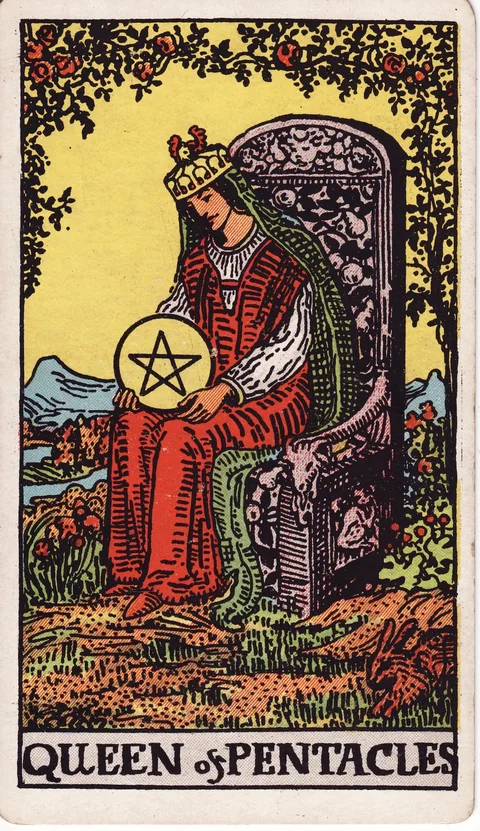
Queen of Pentacles
Practical care and creating conditions for everyday life

Put it into practice
The daily reading uses 22 Major Arcana cards. A draw is not guaranteed to include the card you are studying.
Try Synergy’s daily one-card reading (Major Arcana only) →