On this page
AT A GLANCE
Rider–Waite–Smith, Marseille and Thoth are distinct tarot traditions with different imagery and interpretive systems. A meaning learned in one can be informative in another, but it should not be transferred unchanged when the picture, title, number or correspondence differs.
Explore tarot foundations →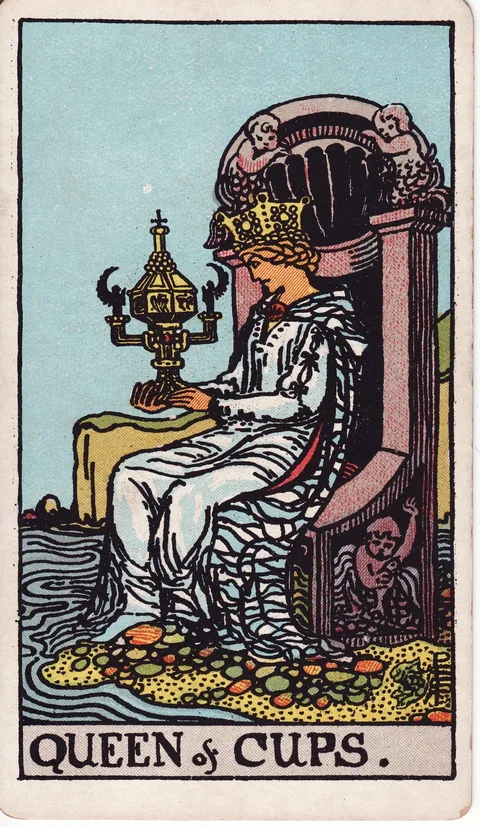
Rider–Waite–Smith #
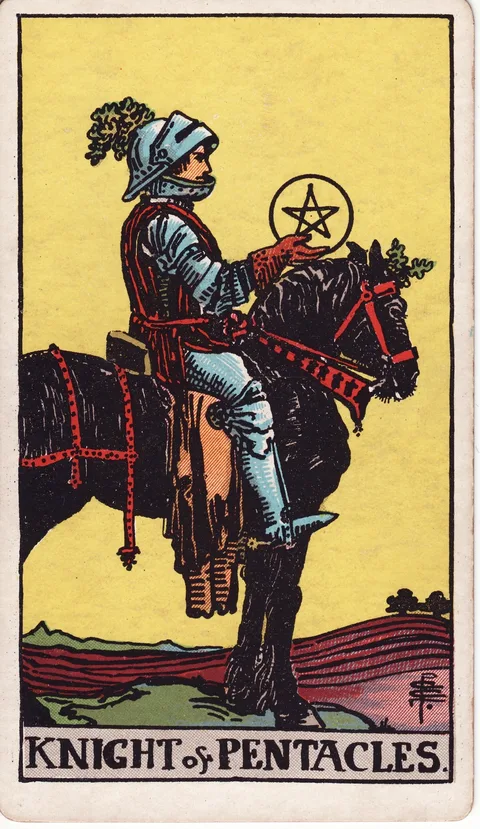
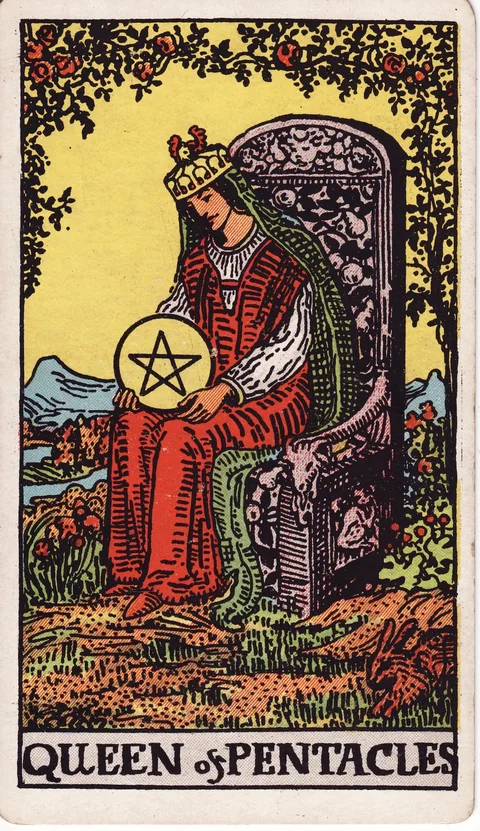
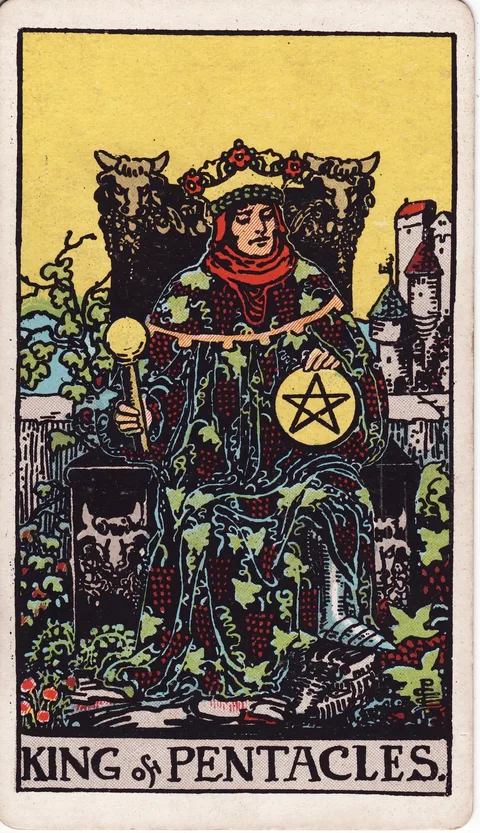
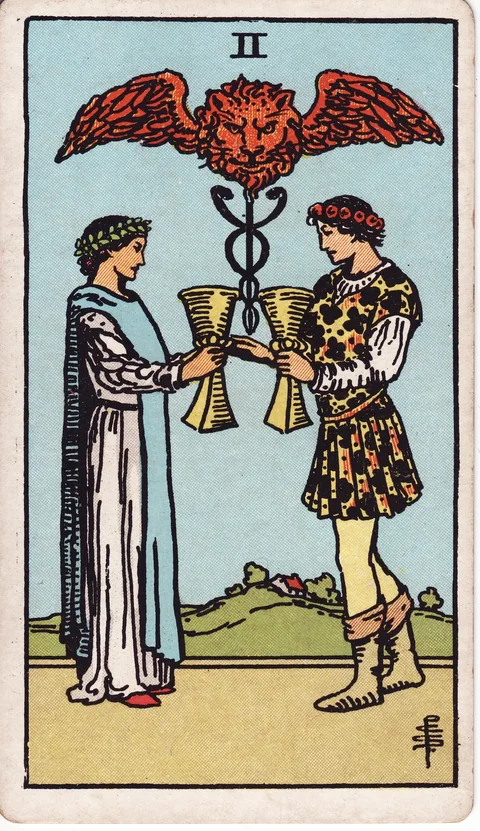
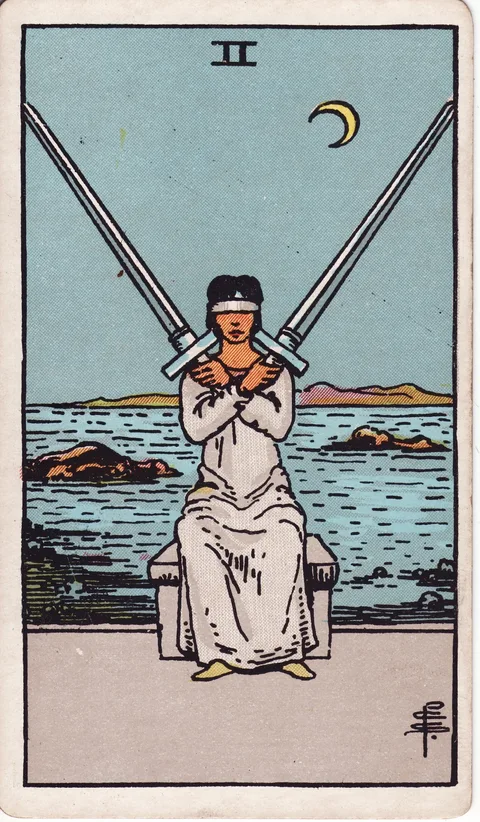
The 1909 deck associated with A. E. Waite and illustrated by Pamela Colman Smith gives narrative scenes to the numbered Minor Arcana. Those scenes strongly shape this library’s readings. Courts are Page, Knight, Queen and King; Strength is VIII and Justice XI.
The imagery draws on Christian, esoteric and other symbolic vocabularies. Waite’s Pictorial Key provides a historical account, but many familiar modern readings go beyond or differ from his divinatory lists. We label our contextual examples as original reflective interpretations.
Tarot de Marseille #
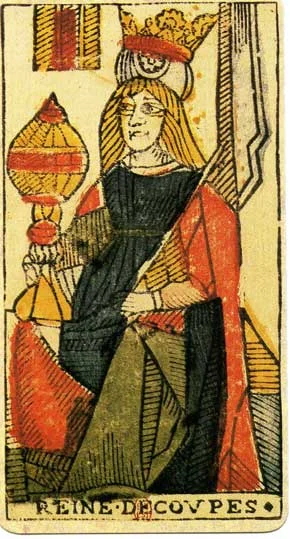
Marseille refers to a family of historical deck patterns, not a single uniform modern deck or one universally agreed reading method. Numbered suit cards generally arrange emblems rather than presenting RWS-style narrative scenes. Readers may work with number, suit, visual arrangement and interactions among figures.
Justice is commonly VIII and Strength XI, the reverse of RWS. Suit names are often translated as Batons, Cups, Swords and Coins. A Three of Swords without a pierced heart should not automatically be read as though Smith’s scene were present.
Queen of Cups in two different deck traditions. Marseille image source · Public domain.
Thoth #
The Thoth deck was designed through Aleister Crowley’s work with artist Frieda Harris. It integrates Golden Dawn material with Crowley’s Thelemic revisions. Courts are Knight, Queen, Prince and Princess, so matching titles directly to RWS creates errors.
Some majors have different names, including Adjustment, Lust, Art, the Aeon and the Universe. Justice/Adjustment is VIII and Strength/Lust XI. Astrological and letter assignments also contain tradition-specific differences, so a Golden Dawn table should not be silently treated as identical to every Thoth attribution.
Study one system clearly before combining #
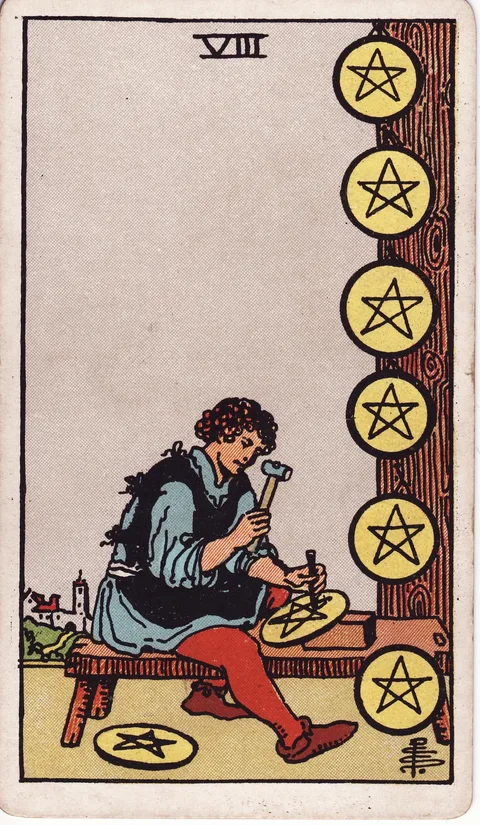
Choose a primary deck and learn its actual pictures and guide. For example, the RWS Eight of Pentacles shows repeated craft work; another deck may emphasize an abstract pattern instead. Both can be studied without pretending they are the same visual evidence.
This library uses RWS images in prose and clearly named Golden Dawn correspondences as an optional layer. No deck tradition is presented as universally correct or predictively proven. The numbers guide explains why printed numbering must remain visible.
Sources & editorial notes
Original explanations and hypothetical examples prepared with AI assistance for Synergy. Sources document the traditions described; they do not establish predictive or causal validity.
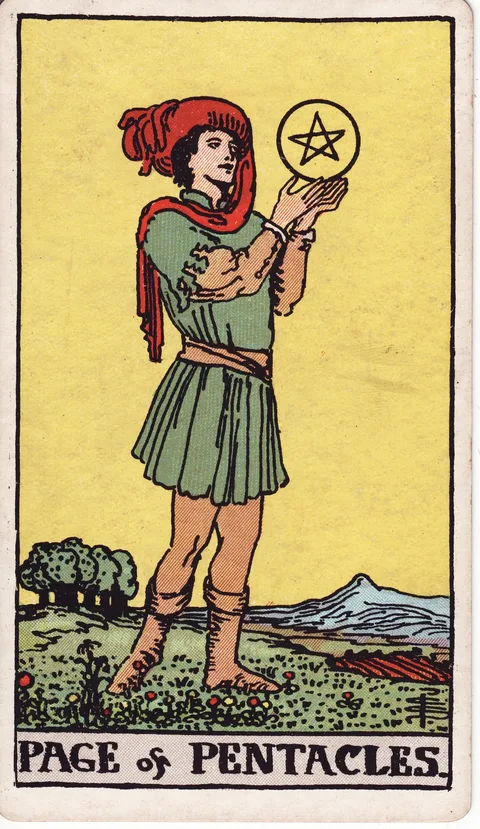
Rider–Waite–Smith artwork by Pamela Colman Smith, public domain. Images are resized historical scans from Wikimedia Commons; the full card images retain their borders and original coloring. Image sources and credits.
- A. E. Waite, The Pictorial Key to the Tarot (1911), illustrated by Pamela Colman Smith
RWS numbering, titles and imagery.
- Tim Husband, Before Fortune-Telling: The History and Structure of Tarot Cards, The Metropolitan Museum of Art
Historical structure and European origins of tarot.
- U.S. Games Systems, Crowley Thoth Tarot Deck
Deck publisher on the Crowley/Harris collaboration.
- Golden Dawn, Book T: The Tarot (historical manuscript compilation)
Historical Golden Dawn titles and attributions; these are distinguished from later Thoth revisions.
- Aleister Crowley, The Book of Thoth, Theory of the Tarot
Primary discussion of Adjustment VIII and Lust XI.
Related tarot reading
Understanding court cards
Read Page, Knight, Queen and King as people, roles or approaches without fixed demographic labels.
Numbers in tarot
Use printed ranks and optional digit reduction while keeping card imagery and personal numerology distinct.
Introduction to tarot
What a tarot deck contains, how a reading works and how to begin without assuming predictive certainty.

Put it into practice
The daily reading uses 22 Major Arcana cards. A draw is not guaranteed to include the card you are studying.
Try Synergy’s daily one-card reading (Major Arcana only) →