On this page
AT A GLANCE
The Page of Cups concerns meeting a feeling or imaginative possibility with curiosity. It can represent a tentative expression, a learner’s openness or a small act of kindness. The card is not a reliable announcement of pregnancy or a message from a particular person.
Explore all 78 tarot cards →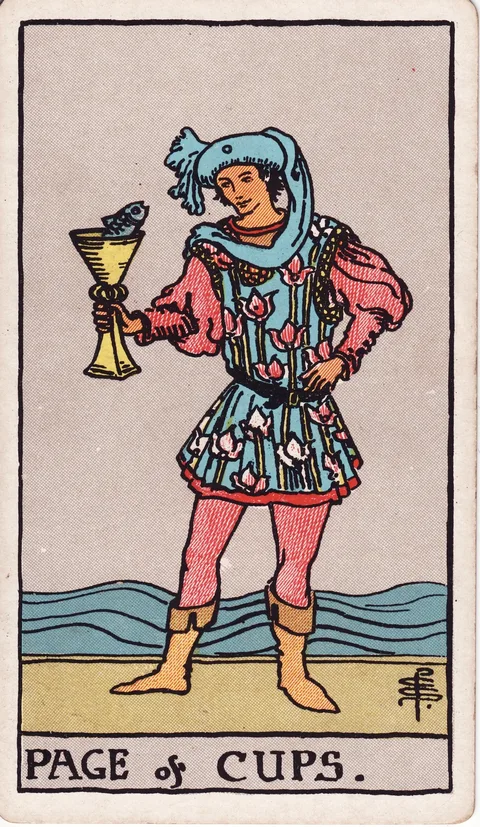 Inspect artwork
Upright meaning #
Upright, allow a feeling to be expressed without requiring it to be polished or permanent. A creative idea may need playful exploration. In a relationship question, a modest honest gesture may be more useful than a dramatic declaration.
Reversed interpretation #
Reversed, consider embarrassment about feelings, fantasy taking the place of communication or emotional attention stretched too thin. The task may be naming the feeling privately before deciding what to share. Sensitivity does not oblige you to disclose everything.
RWS imagery and symbolism #
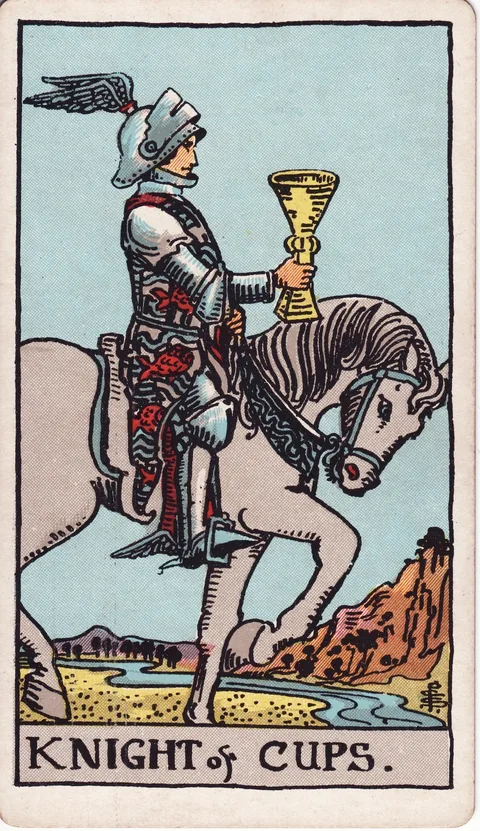
A young figure looks at a fish emerging from a cup, with water behind. The unexpected creature makes the scene playful and surprising. The Page’s interest in what appears distinguishes it from the Knight’s purposeful presentation of a cup.
A contextual reading example #
A reader unsure how to reconnect with a friend draws the Page as advice. It could suggest a short, genuine note acknowledging the wish to talk, while leaving the friend free to respond. The card cannot predict the response.
Distinctions and limits #
Pages are roles or approaches, not fixed ages or genders. Read the court-card guide before assigning a person. No personal numerology number is inferred from this court rank.
Sources & editorial notes
Original explanations and hypothetical examples prepared with AI assistance for Synergy. Sources document the traditions described; they do not establish predictive or causal validity.
Rider–Waite–Smith artwork by Pamela Colman Smith, public domain. Images are resized historical scans from Wikimedia Commons; the full card images retain their borders and original coloring. Image sources and credits.
- A. E. Waite, The Pictorial Key to the Tarot (1911), illustrated by Pamela Colman Smith
Part III, Page of Cups: imagery and historical divinatory meanings. Contextual examples and reversal options are original modern reflective interpretations; historical gender stereotypes and predictive claims are not adopted.
Related tarot reading

Put it into practice
The daily reading uses 22 Major Arcana cards. A draw is not guaranteed to include the card you are studying.
Try Synergy’s daily one-card reading (Major Arcana only) →