On this page
AT A GLANCE
The Six of Wands concerns recognition after effort: a contribution becomes visible and receives support. It can invite confidence and acknowledgment, while asking how success is shared. Public approval is information about a moment, not a complete measure of worth.
Explore all 78 tarot cards →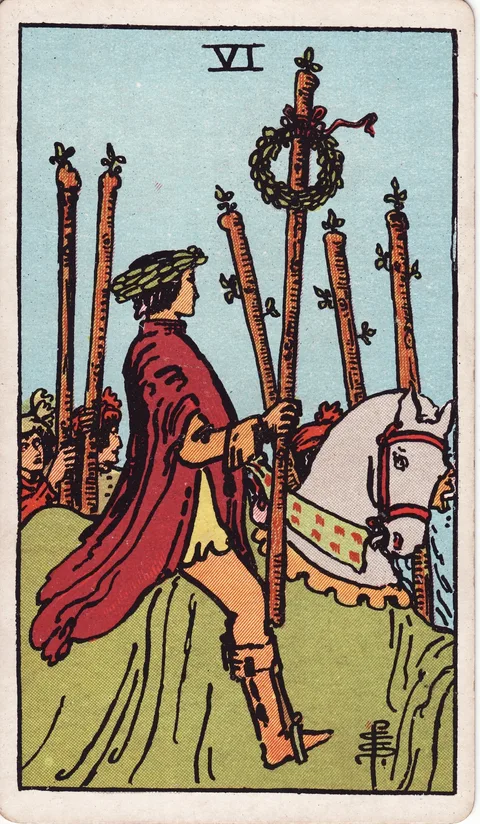 Inspect artwork
Upright meaning #
Upright, recognize a real achievement and communicate it clearly. Accepting acknowledgment can be appropriate, especially when effort has been overlooked. The useful distinction is between sharing a result and becoming dependent on applause to know whether the work matters.
Reversed interpretation #
Reversed, consider delayed recognition, private achievement or the pressure to maintain an admired image. It can also prompt checking whether credit has been distributed fairly. A lack of public praise does not mean that nothing valuable was accomplished.
RWS imagery and symbolism #
A rider wearing a laurel wreath carries a decorated wand among a group of people. The image presents success as publicly witnessed. The surrounding figures matter: recognition takes place within a community, rather than existing only in the rider’s self-assessment.
A contextual reading example #
After a team wins an award, the Six in an advice position could suggest naming the contributors and explaining the work behind the result. In a challenge position, it might ask whether protecting the team’s image is preventing honest discussion of remaining problems.
Distinctions and limits #
The card does not guarantee winning a competition or receiving a promotion. Golden Dawn associates it with Jupiter in Leo. Confidence works best when it remains open to feedback and does not turn recognition into entitlement.
ACROSS TRADITIONS
Explore the connections
Optional correspondences within named systems. Each connection has its own context and source.
Sources & editorial notes
Original explanations and hypothetical examples prepared with AI assistance for Synergy. Sources document the traditions described; they do not establish predictive or causal validity.
Rider–Waite–Smith artwork by Pamela Colman Smith, public domain. Images are resized historical scans from Wikimedia Commons; the full card images retain their borders and original coloring. Image sources and credits.
- A. E. Waite, The Pictorial Key to the Tarot (1911), illustrated by Pamela Colman Smith
Part III, Six of Wands: imagery and historical divinatory meanings. Contextual examples and reversal options are original modern reflective interpretations; historical gender stereotypes and predictive claims are not adopted.
Related tarot reading

Put it into practice
The daily reading uses 22 Major Arcana cards. A draw is not guaranteed to include the card you are studying.
Try Synergy’s daily one-card reading (Major Arcana only) →