On this page
AT A GLANCE
This five-card spread separates a situation from its obstacle, available support, a constructive action and a possible direction. It gives more detail than a three-card row without the complexity of the Celtic Cross. The positions are defined here so the arrangement stays readable.
Explore tarot spreads →
- 1. Situation — center
- 2. Obstacle — left
- 3. Support — right
- 4. Action — below
- 5. Possible direction — above
Lay out the five cards #
Place 1 in the center, 2 to its left, 3 to its right, 4 below and 5 above. The center names the situation; left the obstacle; right the support; below the action; above a possible direction if that action is taken.
This is the library’s stated five-card convention. Five-card spreads vary, and Synergy’s existing daily five-card experience may use different position labels. Always read the labels of the actual spread rather than transferring meanings by card order alone.
Read across, then upward #
Begin with the center. Compare obstacle and support as two conditions around it, then ask how the action uses the support to address the obstacle. Finally interpret the upper card as a conditional direction, not an unavoidable result.
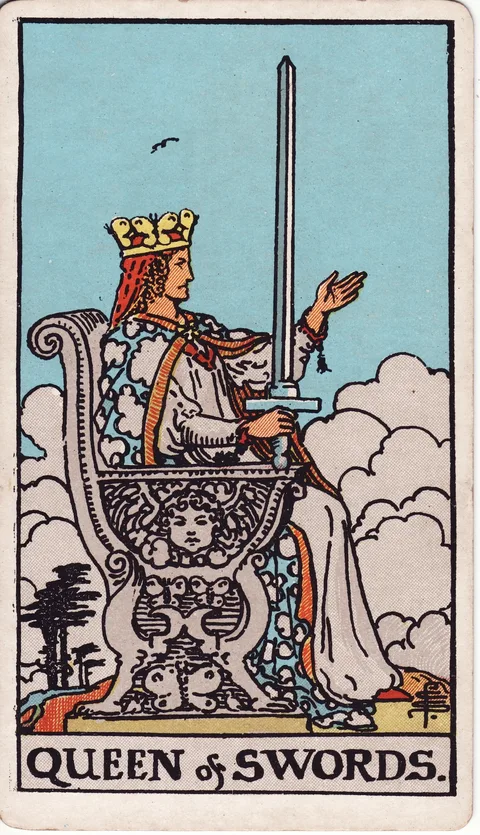
A positive-looking card can be an obstacle: the Six of Wands might suggest dependence on approval. A difficult-looking card can be support: the Queen of Swords may provide a needed boundary. Position modifies the function of the image.
Worked example: restarting a study practice #
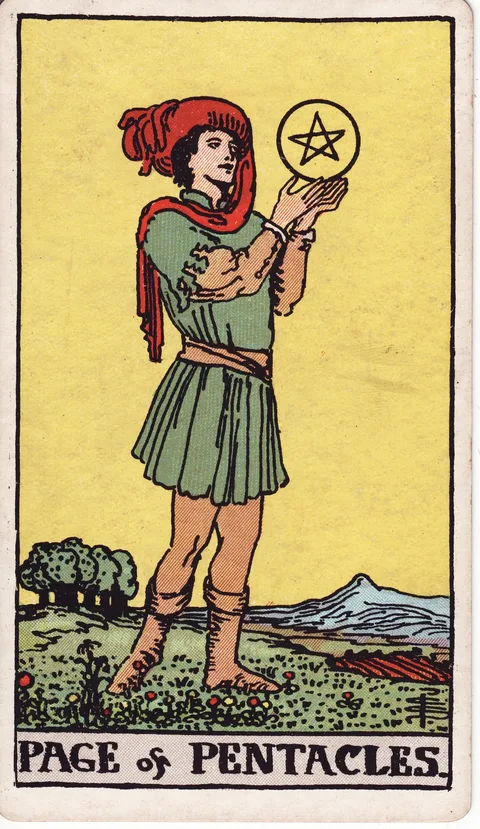
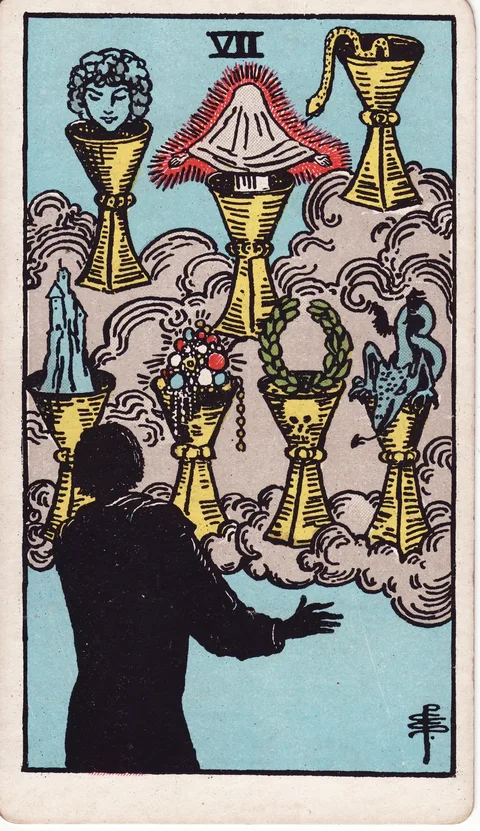
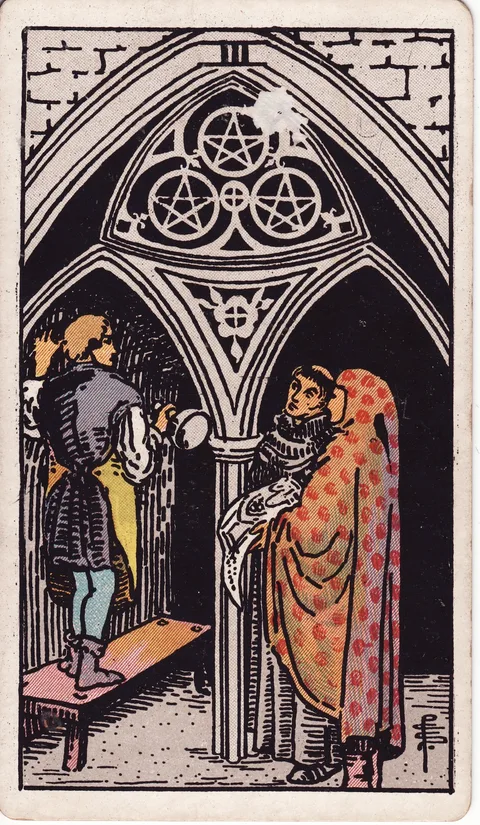
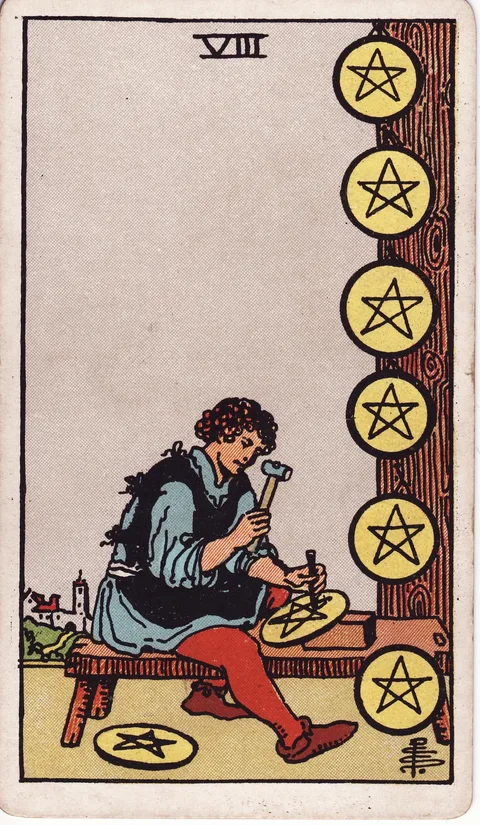
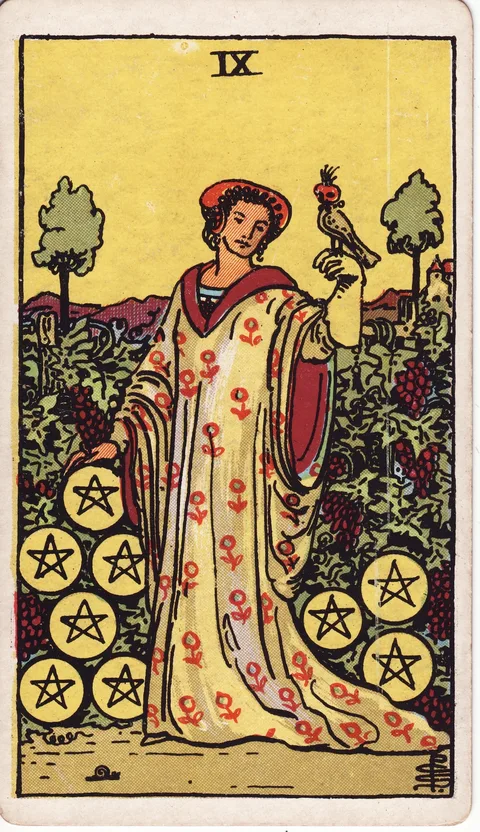
Situation: Page of Pentacles. Obstacle: Seven of Cups. Support: Three of Pentacles. Action: Eight of Pentacles. Direction: Nine of Pentacles.
A beginner may have too many imagined paths. Feedback from a study group could support choosing one repeatable exercise, with greater confidence and independence as a possible result. The next step is a specific practice session and feedback request, not buying every available course.
Keep the additional detail useful #
Do not add more cards merely because the direction is uncomfortable. First identify what the five positions already say and what real information is missing. If a clarifier is necessary, give it a distinct question before drawing.
The layout and examples here are editorial teaching choices informed by position-based tarot practice. They are not presented as a universally established historical spread or as proof of predictive accuracy.
Sources & editorial notes
Original explanations and hypothetical examples prepared with AI assistance for Synergy. Sources document the traditions described; they do not establish predictive or causal validity.
Rider–Waite–Smith artwork by Pamela Colman Smith, public domain. Images are resized historical scans from Wikimedia Commons; the full card images retain their borders and original coloring. Image sources and credits.
- A. E. Waite, The Pictorial Key to the Tarot (1911), illustrated by Pamela Colman Smith
Part III, sections 6–8: historical evidence for interpreting cards within positions. The layout definitions and worked examples in this guide are editorial teaching choices, not quotations or claims of ancient provenance.
Related tarot reading
Situation, action and outcome spread
A three-card arrangement that separates the current pattern from a possible response and its direction.
Celtic Cross tarot spread
Ten clearly defined positions, a readable layout and a complete example of how to synthesize them.
Interpreting tarot cards together
Combine positions, repeated motifs and contrasts without turning a spread into an arbitrary story.
Put it into practice
The daily reading uses 22 Major Arcana cards. A draw is not guaranteed to include the card you are studying.
Try Synergy’s daily one-card reading (Major Arcana only) →