On this page
AT A GLANCE
This relationship spread uses five cards to examine your participation in a relationship without claiming access to another person’s hidden feelings. It can be used for friendship, family, collaboration or romance. Its aim is a clearer conversation and a realistic next step.
Explore tarot spreads →
- 1. My needs
- 2. Observed relationship pattern
- 3. Shared ground to discuss
- 4. Boundary or concern
- 5. My constructive next step
The five positions #
1 — My needs: what deserves acknowledgment in your own experience. 2 — Observed pattern: something you can relate to actual interactions. 3 — Shared ground: a possible point of connection to discuss, not assume. 4 — Boundary or concern: what requires clarification. 5 — My next step: an action within your control.
Arrange the cards in a row or a clearly numbered two-row layout. The numbering determines the meaning. This is an editorial reflection layout, not a claim of an ancient or uniquely authoritative relationship spread.
Keep interpretation connected to observation #
Read the needs and pattern positions together before considering an action. If a card suggests a concern you have never observed, treat it as a question rather than a discovery. Another person’s consent and account matter more than the card.
Shared ground may be a topic for negotiation rather than an existing agreement. A boundary should describe what you can participate in or provide, not a command controlling the other person.
Worked example: an uneven collaboration #
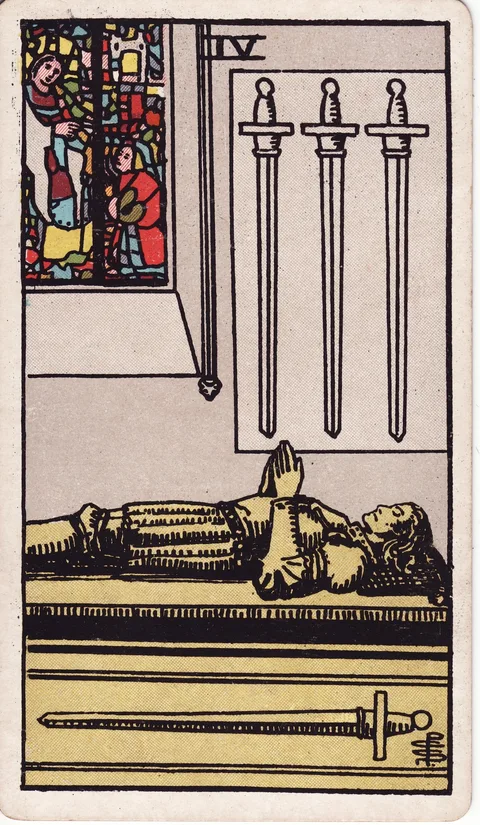
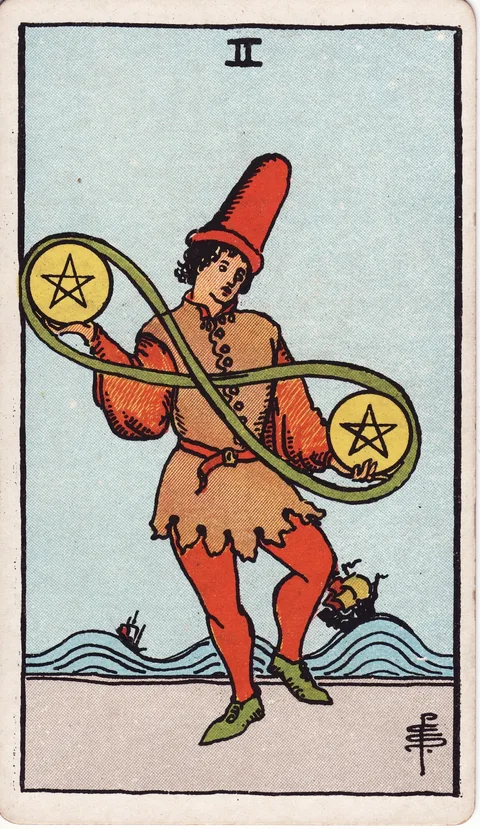
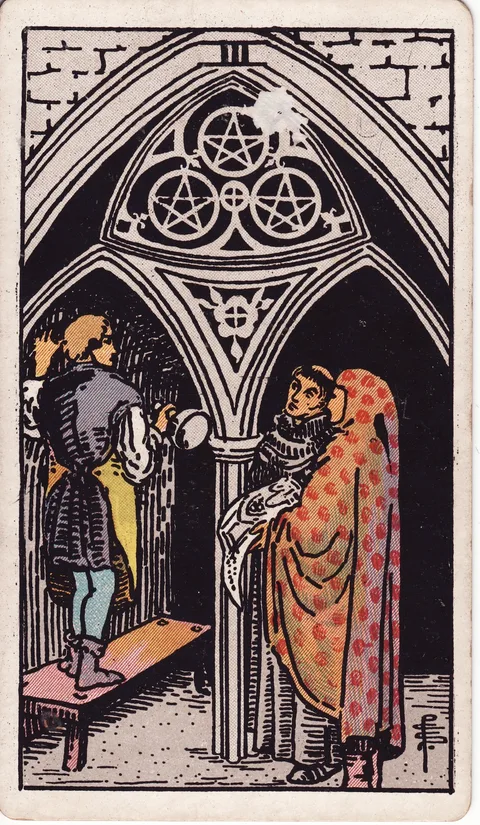
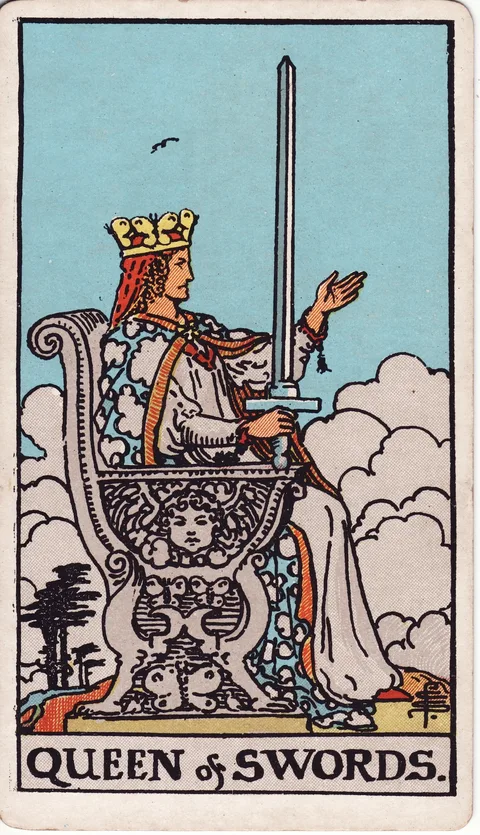
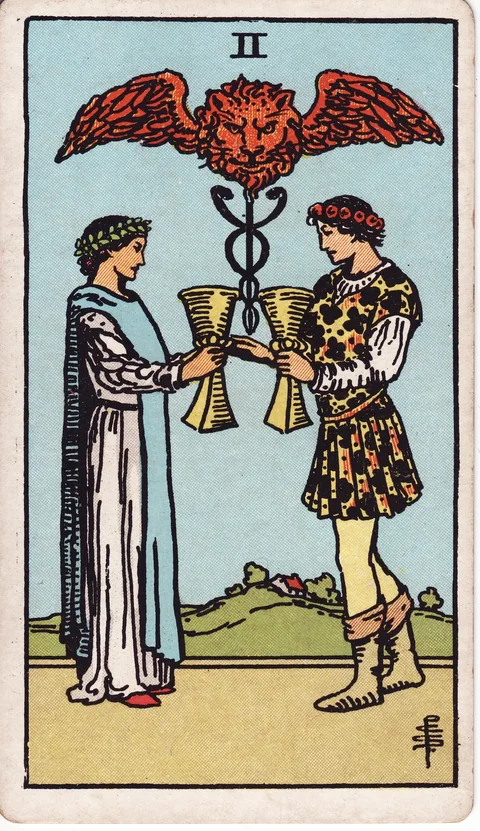
My needs: Four of Swords. Pattern: Two of Pentacles. Shared ground: Three of Pentacles. Boundary: Queen of Swords. Next step: Two of Cups.
One reading is that rest has been squeezed out by constant juggling, while both participants may value good work. A constructive response is to state a clear limit and propose a reciprocal agreement. The cards do not establish that the other person is deliberately exploiting the situation.
What the layout cannot answer #
It cannot determine whether someone loves you, is faithful or will return. A relationship reading should not become a way to avoid direct communication or repeatedly seek reassurance about someone’s intentions.
If there is actual coercion or danger, practical support and protection take priority over interpreting the arrangement. The spread does not require staying, forgiving or leaving; it helps articulate questions while real circumstances guide decisions.
Sources & editorial notes
Original explanations and hypothetical examples prepared with AI assistance for Synergy. Sources document the traditions described; they do not establish predictive or causal validity.
Rider–Waite–Smith artwork by Pamela Colman Smith, public domain. Images are resized historical scans from Wikimedia Commons; the full card images retain their borders and original coloring. Image sources and credits.
- A. E. Waite, The Pictorial Key to the Tarot (1911), illustrated by Pamela Colman Smith
Part III, sections 6–8: historical evidence for interpreting cards within positions. The layout definitions and worked examples in this guide are editorial teaching choices, not quotations or claims of ancient provenance.
Related tarot reading

Put it into practice
The daily reading uses 22 Major Arcana cards. A draw is not guaranteed to include the card you are studying.
Try Synergy’s daily one-card reading (Major Arcana only) →