On this page
AT A GLANCE
The Page of Swords concerns an alert, questioning approach to information. It can represent a learner, a message or the first attempt to articulate a difficult idea. Curiosity is useful when paired with verification and an awareness of how questions affect others.
Explore all 78 tarot cards →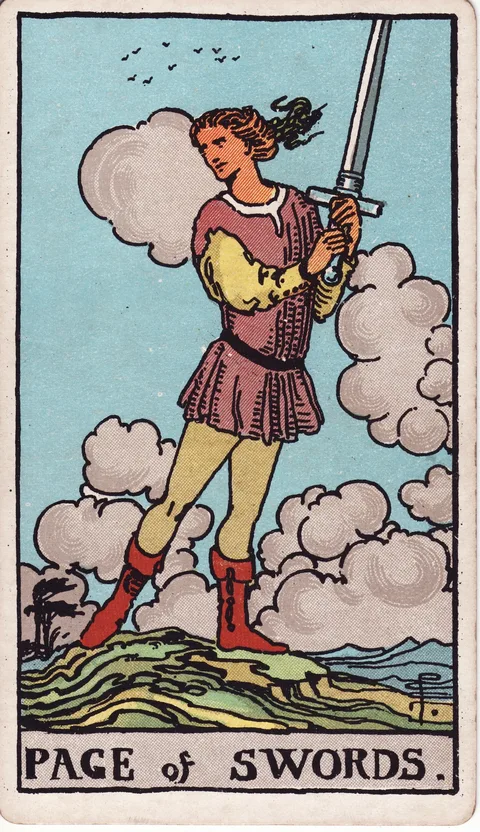 Inspect artwork
Upright meaning #
Upright, investigate, ask for definitions and practice expressing an idea clearly. The Page does not need to have the final answer. A willingness to notice inconsistency can improve a task if it leads to inquiry rather than constant suspicion.
Reversed interpretation #
Reversed, consider unverified information, defensive questioning or a message delivered before it is understood. It may ask for a pause between noticing and announcing. The card cannot prove that someone is spying or gossiping about you.
RWS imagery and symbolism #
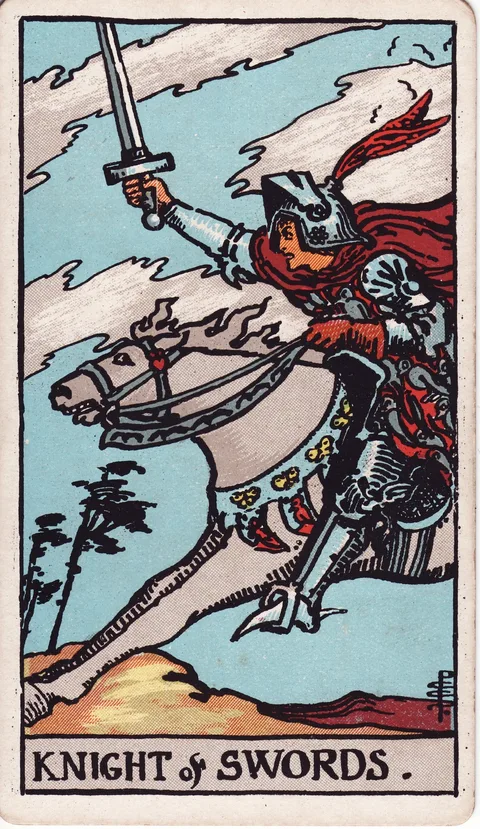
A standing figure holds a sword in a windy landscape, looking to the side while remaining ready. The active sky and stance suggest alertness. The image is less settled than the King’s judgment and less committed to motion than the Knight.
A contextual reading example #
In a reading about joining a new project, the Page as advice could mean asking what terms mean, where decisions are recorded and which claims need checking. It would not mean challenging every person merely to demonstrate intelligence.
Distinctions and limits #
Read the Page as an approach before assigning an age or gender. No numerology value is inferred from the court title. Its questioning role is most useful when a genuine answer is allowed to change the questioner’s view.
Sources & editorial notes
Original explanations and hypothetical examples prepared with AI assistance for Synergy. Sources document the traditions described; they do not establish predictive or causal validity.
Rider–Waite–Smith artwork by Pamela Colman Smith, public domain. Images are resized historical scans from Wikimedia Commons; the full card images retain their borders and original coloring. Image sources and credits.
- A. E. Waite, The Pictorial Key to the Tarot (1911), illustrated by Pamela Colman Smith
Part III, Page of Swords: imagery and historical divinatory meanings. Contextual examples and reversal options are original modern reflective interpretations; historical gender stereotypes and predictive claims are not adopted.
Related tarot reading

Put it into practice
The daily reading uses 22 Major Arcana cards. A draw is not guaranteed to include the card you are studying.
Try Synergy’s daily one-card reading (Major Arcana only) →