On this page
AT A GLANCE
Tarot is a deck-based symbolic practice that uses pictures, ranks and arrangements to explore questions. A standard deck has 78 cards: 22 Major Arcana and 56 Minor Arcana. Readers use it in different ways, including divination, reflection and storytelling; this library emphasizes clear, non-deterministic interpretation.
Explore tarot foundations →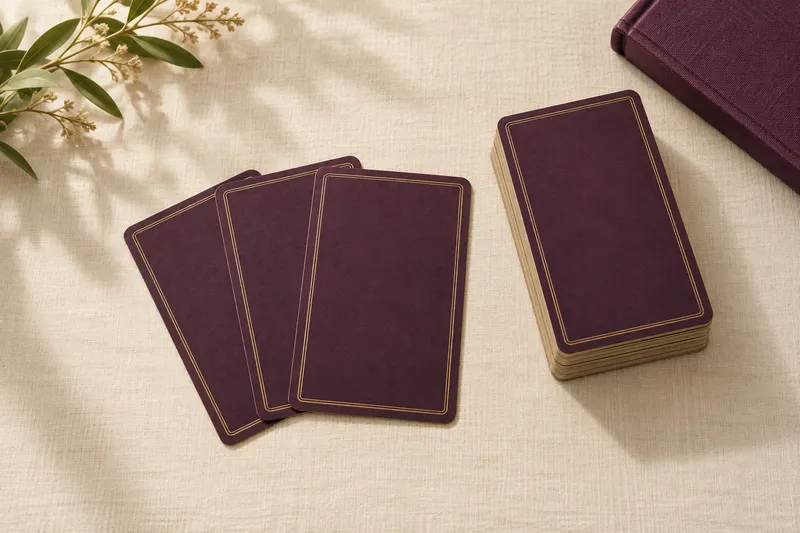
A brief historical orientation #
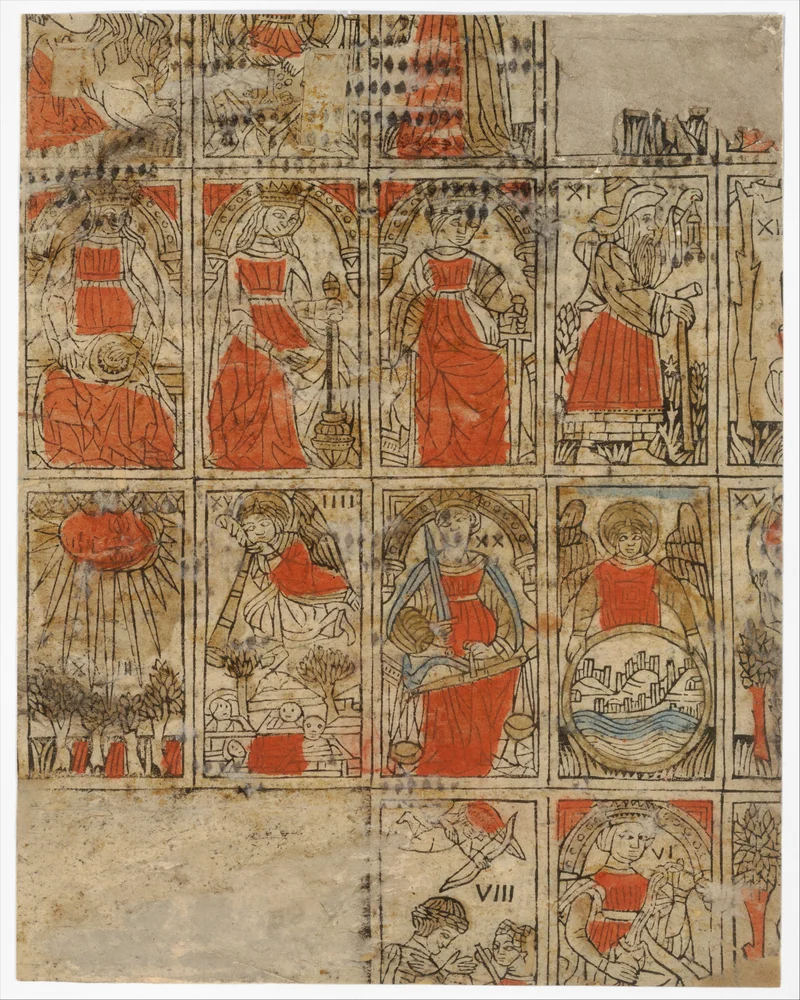
Tarot developed in fifteenth-century Europe as a card game. Occult and divinatory systems were elaborated later. Claims that the deck is a surviving ancient Egyptian book should be treated as historical occult theories, not established origins.
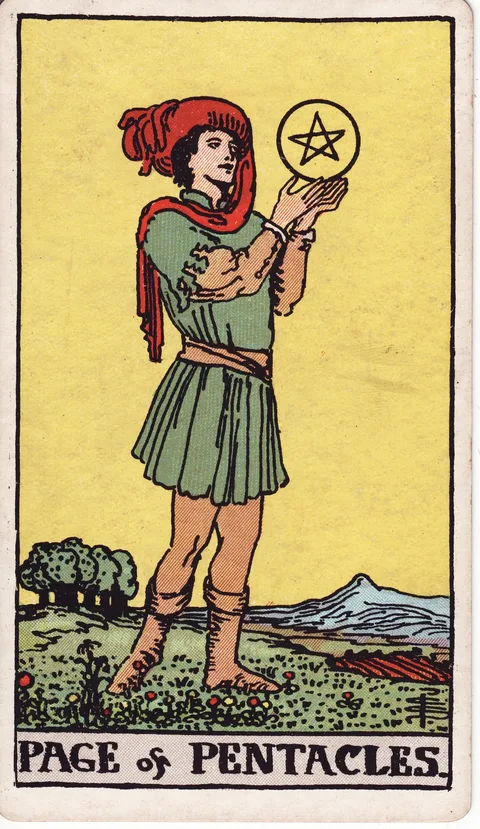
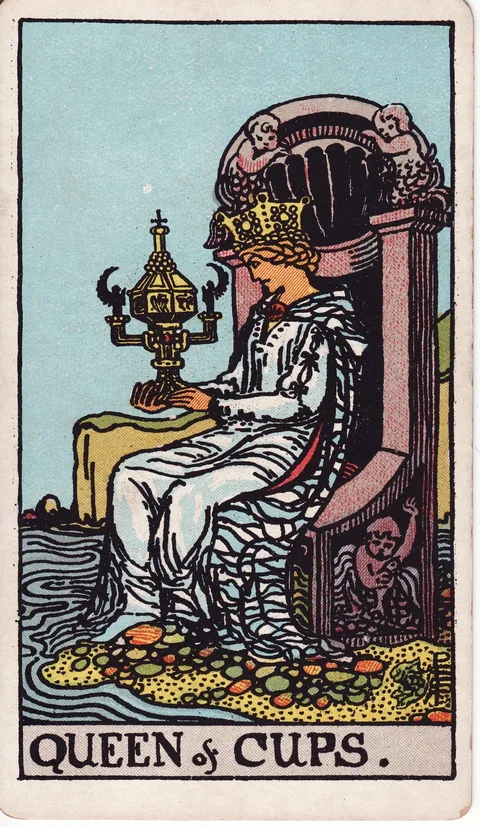
Our primary visual reference is the Rider–Waite–Smith deck, published in 1909, with designs associated with A. E. Waite and illustrations by Pamela Colman Smith. Smith’s scenes on the numbered suit cards are central to how this library reads them. Other decks may require different assumptions.
The two parts of the deck #
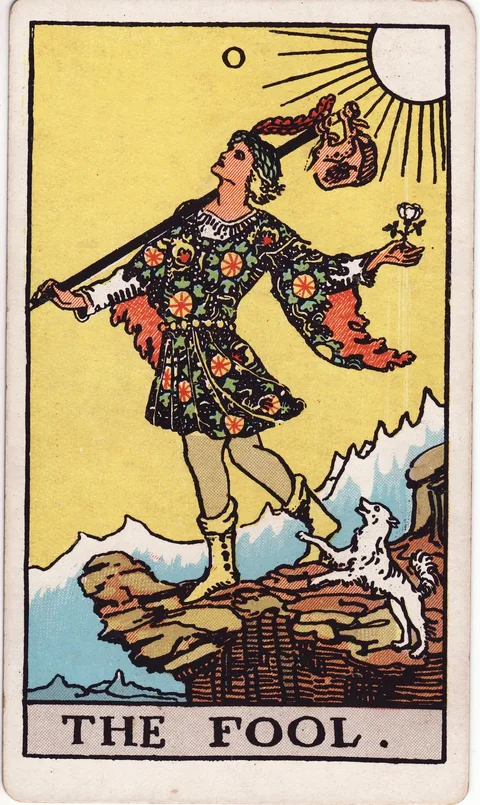
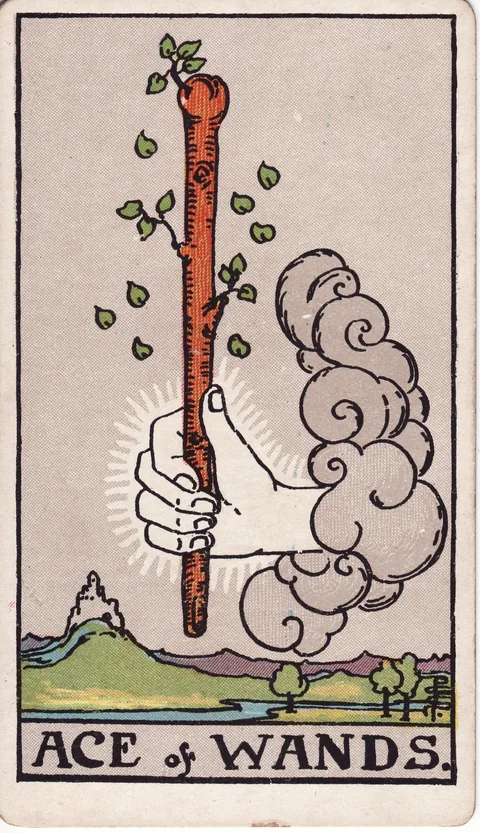
The Major Arcana contain named trumps such as the Fool, Justice and the World. The Minor Arcana contain Wands, Cups, Swords and Pentacles, each with Ace through Ten and four courts.
Majors can frame broader themes; Minors often make the situation more concrete. This is a reading tendency, not a rule that a major must outweigh every other card. Courts may be roles or approaches rather than fixed people.
What gives a card meaning in a reading #
Meaning comes from the question, the position, the image and the method being used. The Four of Swords in an action position can suggest a deliberate pause; in an obstacle position it might ask whether withdrawal is delaying engagement. Position does not make the picture irrelevant, but changes its job.
Begin with a one-card spread and a question such as ‘What approach could help with this task?’ Describe the image before reaching for a keyword, then write a practical interpretation that can be discussed.
What the cards cannot establish #
A card does not prove another person’s thoughts, predict a diagnosis or guarantee a result. Broad symbols can fit many situations, so allow disagreement and record when an interpretation was not useful. Do not redraw repeatedly until a desired answer appears.
You do not need to choose a zodiac sign, provide personal data or believe in a particular metaphysical theory to study the deck. Synergy’s daily draw is a separate Major-Arcana-only experience; the library gives access to all 78 cards.
Sources & editorial notes
Original explanations and hypothetical examples prepared with AI assistance for Synergy. Sources document the traditions described; they do not establish predictive or causal validity.
Rider–Waite–Smith artwork by Pamela Colman Smith, public domain. Images are resized historical scans from Wikimedia Commons; the full card images retain their borders and original coloring. Image sources and credits.
The opening scene is an AI-generated editorial illustration. Illustration credits and prompts.
- Tim Husband, Before Fortune-Telling: The History and Structure of Tarot Cards, The Metropolitan Museum of Art
Historical origins and deck structure.
- A. E. Waite, The Pictorial Key to the Tarot (1911), illustrated by Pamela Colman Smith
RWS divisions, imagery and position-based reading.
Related tarot reading
How to read tarot
A practical sequence for questions, positions, images, interpretation and a useful next step.
Asking useful tarot questions
Frame questions around context and agency rather than secret knowledge or guaranteed outcomes.
Rider–Waite–Smith, Marseille and Thoth
Compare imagery, numbering and court titles across three influential tarot traditions.
Put it into practice
The daily reading uses 22 Major Arcana cards. A draw is not guaranteed to include the card you are studying.
Try Synergy’s daily one-card reading (Major Arcana only) →