On this page
AT A GLANCE
The sixteen court cards are the Page, Knight, Queen and King in each RWS suit. They can represent a person, a role or a way of approaching the question. Begin with the suit and the rank’s activity rather than assigning age, gender or appearance.
Explore tarot foundations →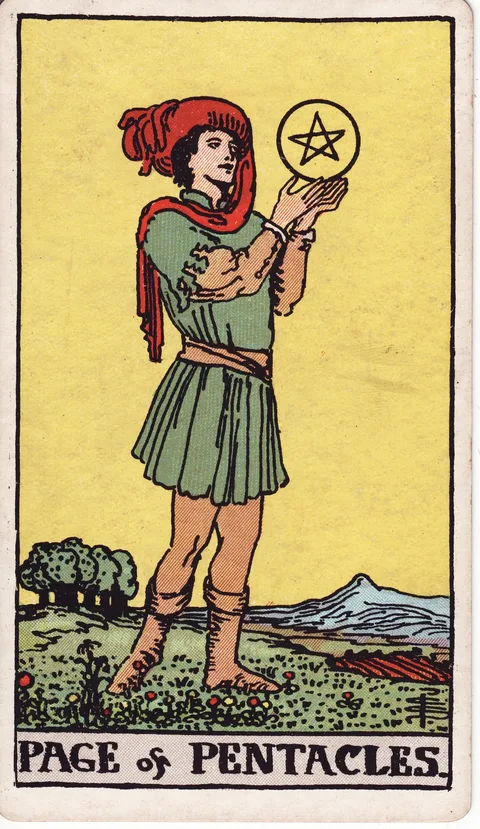
Four roles to compare #
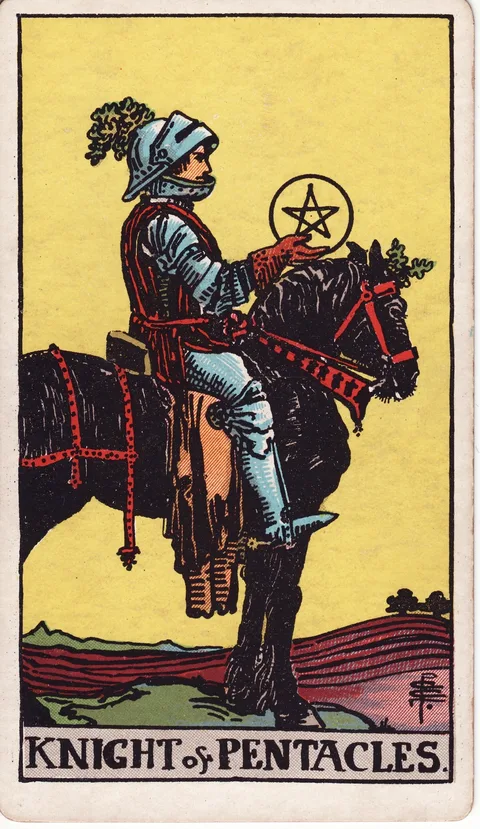
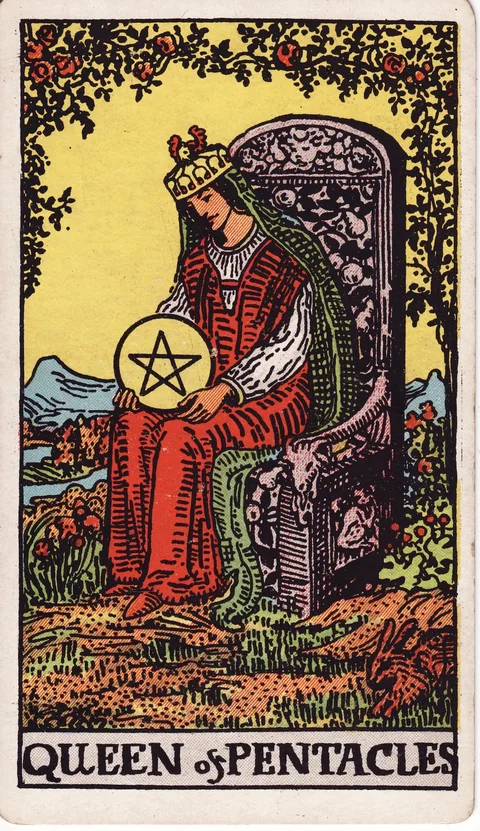
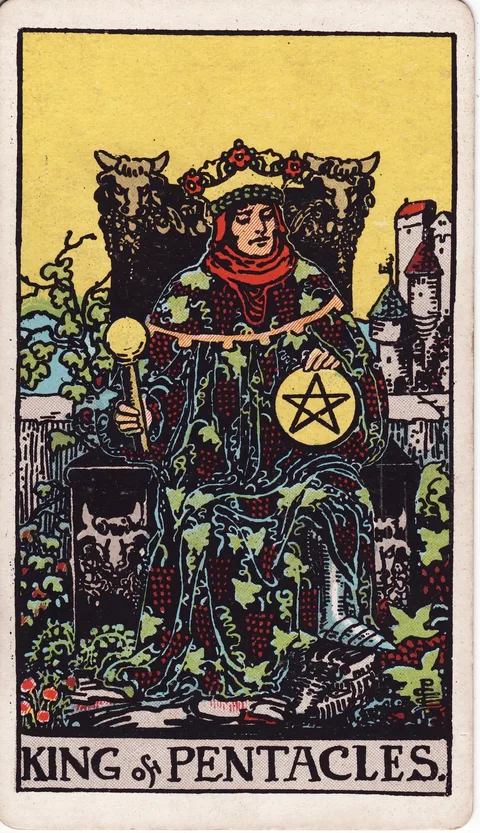
Pages often explore or learn; Knights pursue or put a suit into motion; Queens attend to and sustain its qualities; Kings take responsibility for directing them. This is a modern teaching framework, not a strict hierarchy of personal worth.
Compare Page of Pentacles learning a skill with King of Pentacles stewarding resources. The Page may be the more useful approach when even an experienced person begins something unfamiliar.
Let the suit make the role specific #
A Knight of Wands pursues creative possibility; a Knight of Cups carries an invitation or ideal; a Knight of Swords moves with an argument; a Knight of Pentacles sustains practical effort. ‘Knight’ alone is not enough.
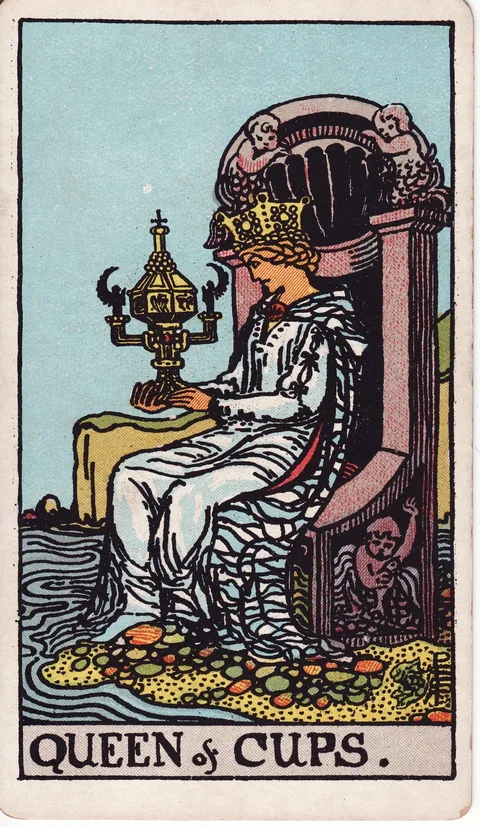
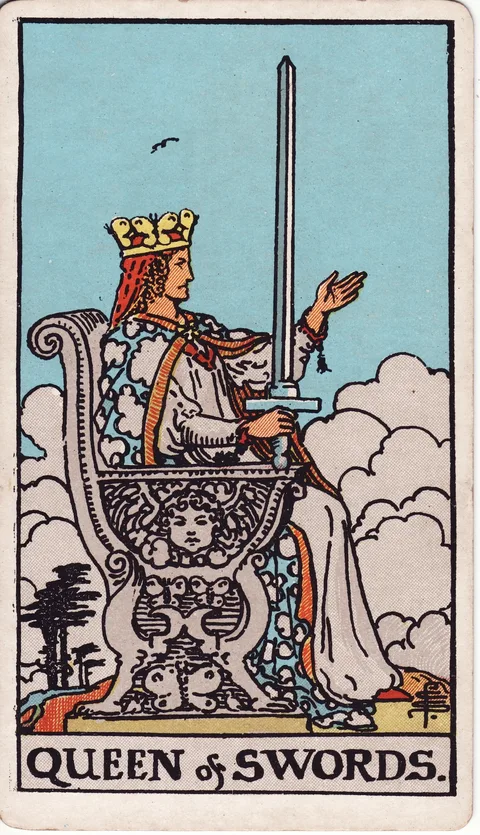
Likewise, Queen of Cups and Queen of Swords are not simply emotional versus unemotional people. One can invite attentive care, the other clear distinctions and boundaries. A person can need both approaches in the same conversation.
When a court might represent someone #
If the question explicitly concerns a known role, a court can help discuss how that role is being carried. Check the interpretation with actual behavior. Do not assume that drawing a King proves a man is involved or that a Page must mean a child.
For a group project, Queen of Wands as advice could invite a welcoming, confident tone. It need not refer to a particular colleague. Reading a role first often produces a more actionable answer than trying to identify a stranger.
Court names change across decks #
RWS uses Page, Knight, Queen and King. Thoth uses Princess, Prince, Queen and Knight. Golden Dawn descriptions also distinguish mounted and enthroned figures in ways that do not follow simple title matching. Astrological court assignments require an explicit mapping between those systems.
This library therefore avoids assigning zodiac signs or personal numerology values from an RWS court title alone. Historical physical and gender stereotypes are not adopted. Study the deck’s image and stated convention before adding a more specialized correspondence.
Sources & editorial notes
Original explanations and hypothetical examples prepared with AI assistance for Synergy. Sources document the traditions described; they do not establish predictive or causal validity.
Rider–Waite–Smith artwork by Pamela Colman Smith, public domain. Images are resized historical scans from Wikimedia Commons; the full card images retain their borders and original coloring. Image sources and credits.
- A. E. Waite, The Pictorial Key to the Tarot (1911), illustrated by Pamela Colman Smith
Parts II–III: historical imagery, divinatory meanings and use of positions. Modern reflective procedures and examples are editorial choices.
- Golden Dawn, Book T: The Tarot (historical manuscript compilation)
Historical suit and court structure; specialized correspondence methods are distinct from the beginner method used here.
Related tarot reading
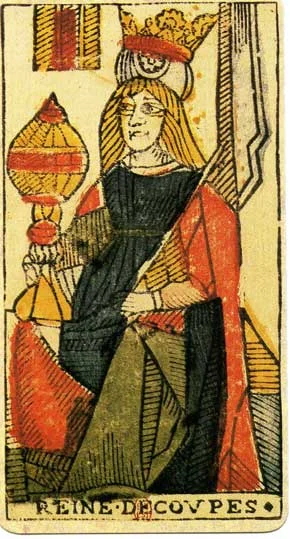
Rider–Waite–Smith, Marseille and Thoth
Compare imagery, numbering and court titles across three influential tarot traditions.
Interpreting tarot cards together
Combine positions, repeated motifs and contrasts without turning a spread into an arbitrary story.
How to read tarot
A practical sequence for questions, positions, images, interpretation and a useful next step.
Put it into practice
The daily reading uses 22 Major Arcana cards. A draw is not guaranteed to include the card you are studying.
Try Synergy’s daily one-card reading (Major Arcana only) →