On this page
AT A GLANCE
Swords are the tarot suit commonly associated with thought, communication, decisions and conflict. Their edge can symbolize a useful distinction or a painful division. The suit is not simply bad news, and its dramatic images should not be treated as literal forecasts.
Explore the four suits →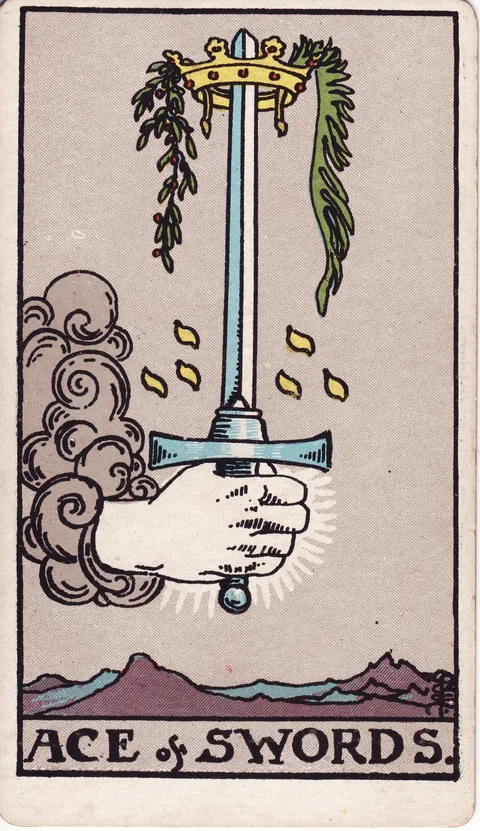
The uses and costs of a clear edge #
Golden Dawn-derived tarot associates Swords with Air. Language and ideas can clarify a problem, set a boundary or wound a relationship. A useful reading asks how thinking is being used and what evidence supports the conclusion.
The suit’s difficult scenes also describe experience: distress, rest, transition and finality. They do not diagnose mental illness or prove that someone intends harm. Keep the distinction between an internal concern and an external event.
A range beyond conflict #
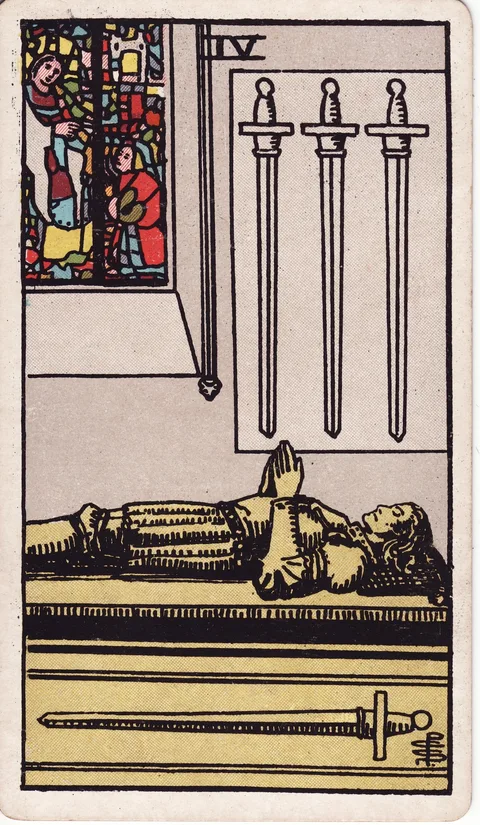
The Ace brings clarity; the Two holds a decision; the Three acknowledges pain; the Four rests. The Five examines the cost of a contest, the Six a passage, and the Seven an indirect strategy. Each has a different task.
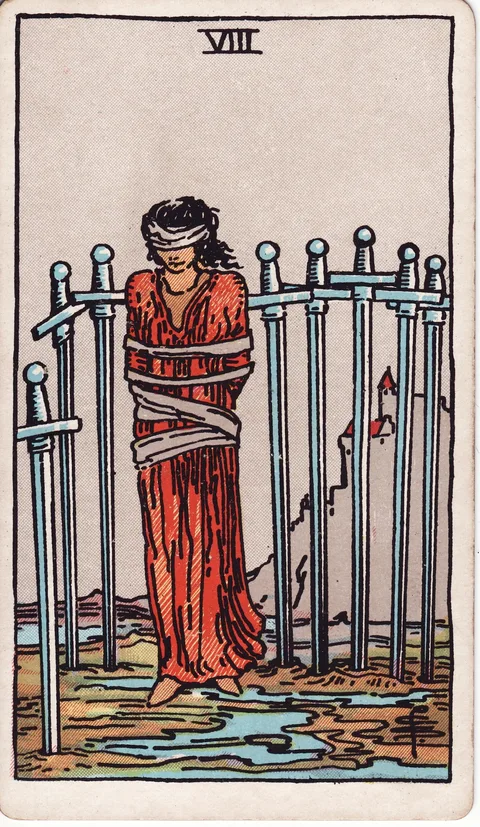
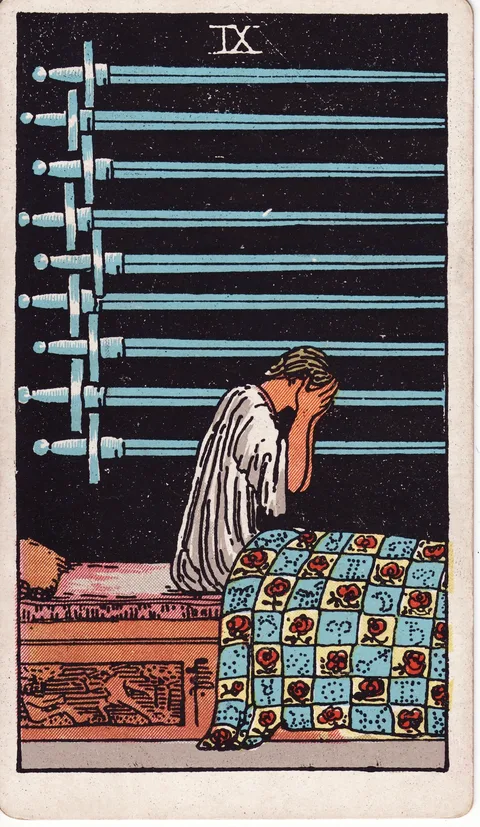
The Eight concerns constraint and perspective, the Nine distressing thought, and the Ten an ending. Compare Eight and Nine carefully: constrained action and worried anticipation are related but different experiences.
How judgment develops #
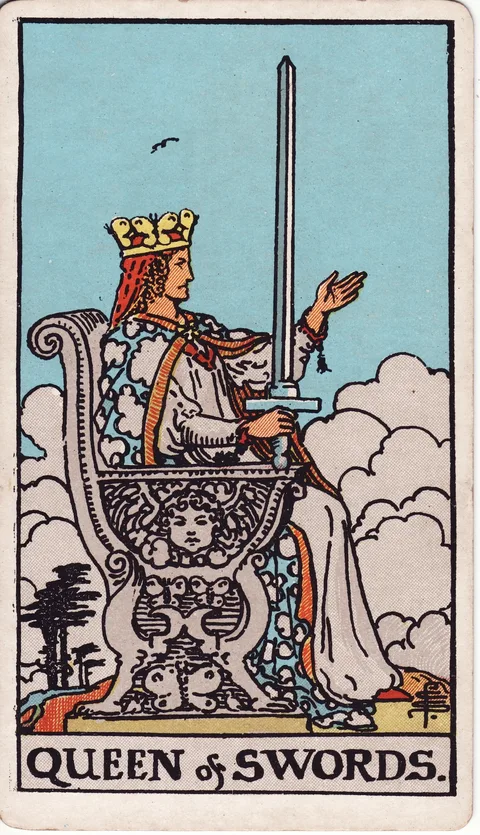
The Page questions, the Knight argues or acts quickly, the Queen discerns and sets boundaries, and the King takes responsibility for decisions. These are interpretive roles, not intelligence rankings. A beginner’s question can be more useful than an authority’s premature answer.
A suit-level example #
If Ace of Swords appears as action and Four of Swords as support, a reader might prepare one clear statement after taking time away from an argument. Precision and rest can work together.
Several Swords do not guarantee a crisis. Read positions and actual circumstances, and avoid using a card as evidence for accusations. Where distress is persistent, appropriate human support matters more than repeatedly drawing for reassurance.
ACROSS TRADITIONS
Explore the connections
Optional correspondences within named systems. Each connection has its own context and source.
Sources & editorial notes
Original explanations and hypothetical examples prepared with AI assistance for Synergy. Sources document the traditions described; they do not establish predictive or causal validity.
Rider–Waite–Smith artwork by Pamela Colman Smith, public domain. Images are resized historical scans from Wikimedia Commons; the full card images retain their borders and original coloring. Image sources and credits.
- A. E. Waite, The Pictorial Key to the Tarot (1911), illustrated by Pamela Colman Smith
Parts I–III: deck divisions, suit images and card sequence. Interpretive examples here are original.
- Golden Dawn, Book T: The Tarot (historical manuscript compilation)
Printed pages 3–7 and the suit sections: Golden Dawn elemental and astrological attributions.
Related tarot reading
Put it into practice
The daily reading uses 22 Major Arcana cards. A draw is not guaranteed to include the card you are studying.
Try Synergy’s daily one-card reading (Major Arcana only) →